[Expert Music Industry Tips] How To Choose The Right Band Members For Your Band
EARN A LOT MORE MONEY
PLAYING LIVE

EMAIL TO GET ACCESS
By submitting your info, you agree to send it to Tom Hess Music Corporation who will process and use it according to their privacy policy.
Want to find band members who are both:
- incredibly motivated and
- dedicated to your band's success?
Finding such musicians can be a big challenge.
It’s hard enough to find musicians who are skilled enough to even play in a band.
You know what's even harder?
Finding people who are 100% committed to making your band's music career successful.
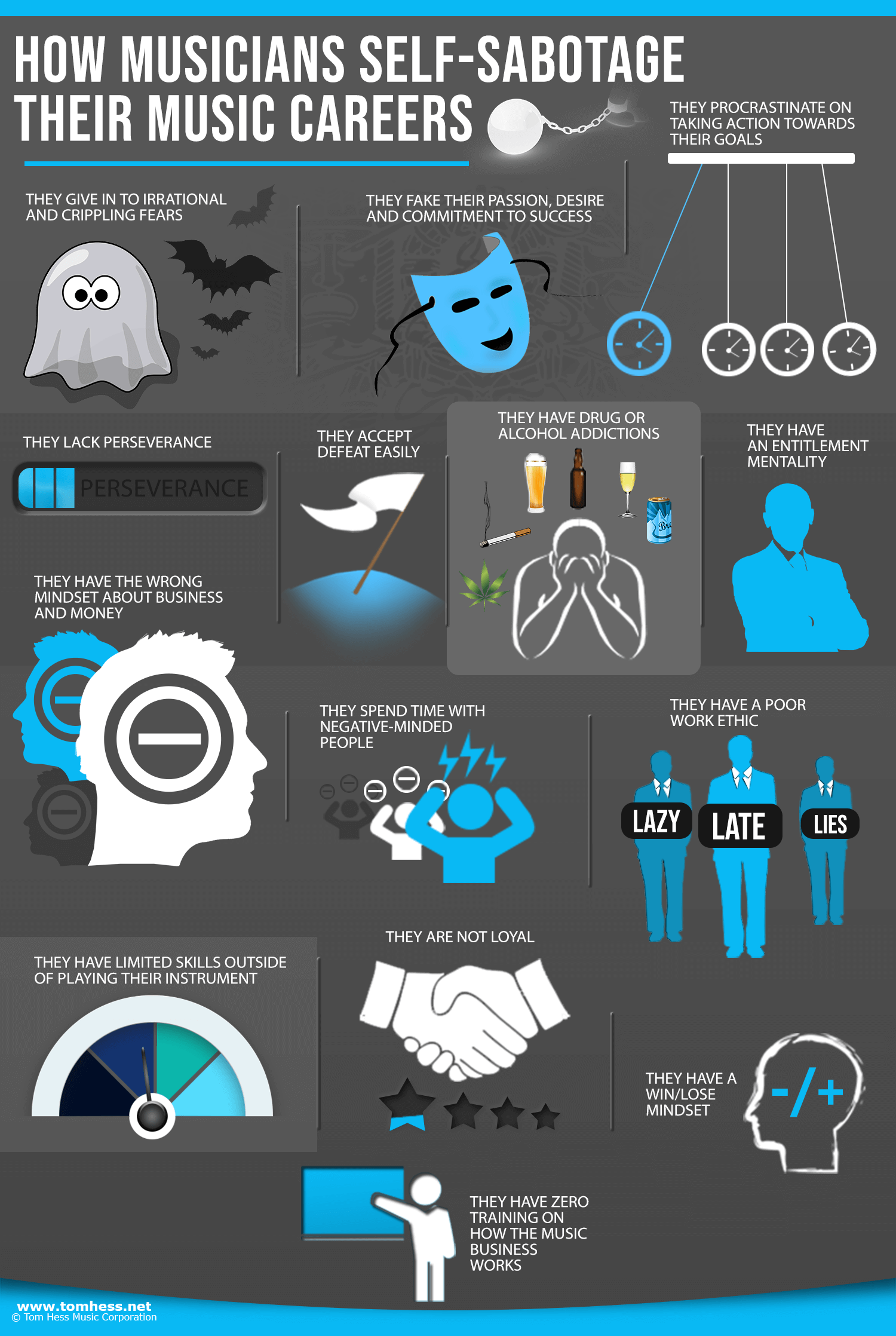
(While avoiding those who have attitude/drug/alcohol/cashflow/legal problems.
Because if your band members have any of those problems - they can ruin your band.)
However...
... there are many things you can do to make your search for band members more efficient and more effective.
(And less stressful, to boot.)
That's what this music career article is all about.
Here are 7 music industry tips that help you select the right musicians for your band:
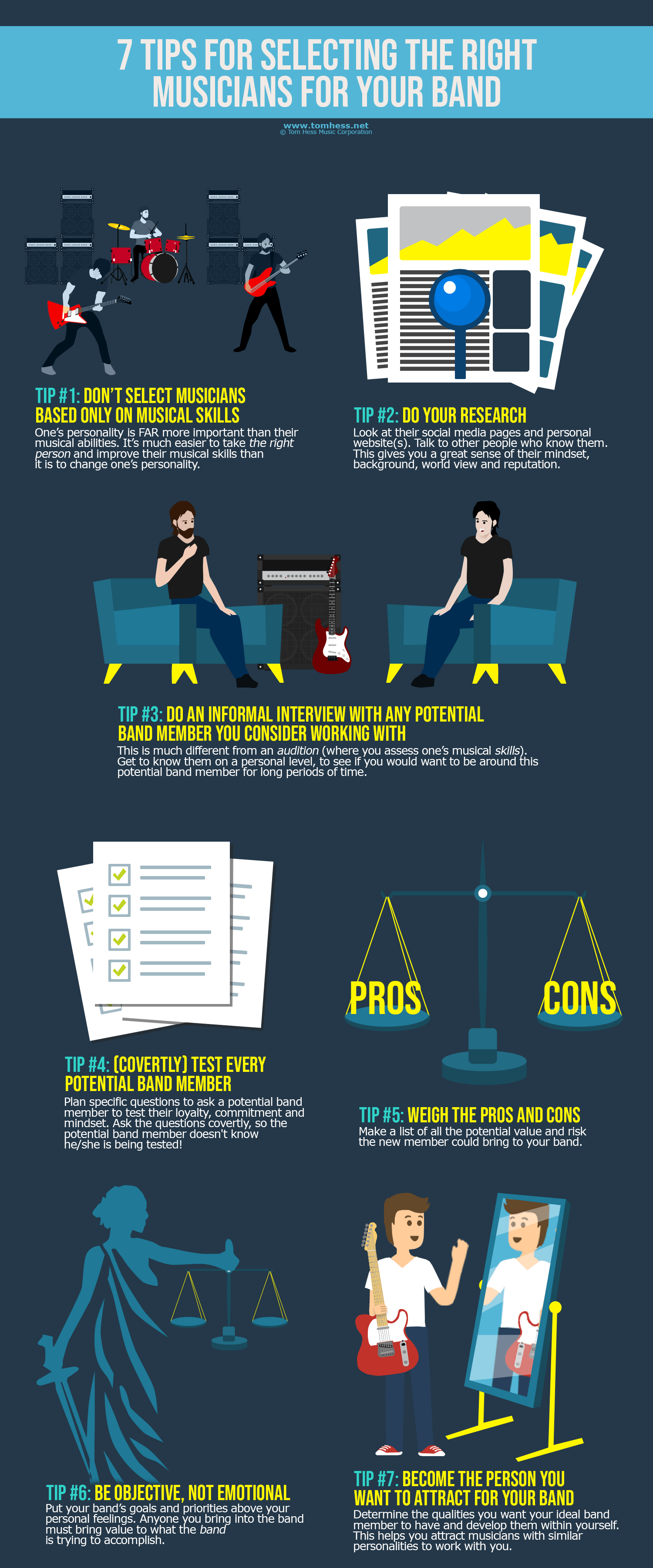
Tip #1: Don’t Select Musicians Based Only On Musical Skills.
Your band members have different personalities & mindsets that are far more important than their musical abilities. It’s much easier to take the right person and improve their musical skills than it is to change one’s personality.
EARN A LOT MORE MONEY
PLAYING LIVE
EMAIL TO GET ACCESS
By submitting your info, you agree to send it to Tom Hess Music Corporation who will process and use it according to their privacy policy.
(Also, if your band members have the right personality, they will actively be working on their musical skills in their own music career anyway.)
Far more bands fall apart because of personality clashes among band members than because of lack of musical skills.
Here are the most important qualities to look for:
- Congruency of goals - all band members need to be equally committed to success. Equally committed does not mean that everyone has to want to be a rock star.
It means that everyone has to have a clear goal for their music career and these goals need to be congruent among all band members.
This makes it more likely that the band will work as a team to achieve an outcome everyone is committed to.
- Work ethic - It takes a lot of work to make a band successful. The work required goes far beyond the basics of writing, practicing and performing songs. Everyone in the band needs to be willing to put in the effort required to achieve the band’s goals.
Perfect example:
I recently (at the time of writing this) had a chat with a fairly new Music Careers Mentoring Program member (Andrew) who complained that his band’s career was moving too slow even with the help he was getting in the program.
So, I said:
“Dude, it’s 1am where you live right now. Yet here you are - talking to me about how to further your band’s career instead of partying or playing video games. And I have just one question:
Where the HELL is the REST of your band?
Turns out, Andrew’s other band members were (and I kid you not):
- All unemployed... except for one who was making a “living” busking, while still living with his parents because he couldn’t afford to move out on his own
- Pestering Andrew to share what he was learning in the program with them because they were “in the same band together and deserved to know”
- Doing pretty much nothing to help the band besides coming up with song ideas... leaving Andrew doing all the business tasks needed to make the band grow.
And that situation is a perfect illustration of the myth about the “cutthroat” competition in the music industry.
Lol, yeah right.
Similar to Andrew’s band, most bands struggle like heck to get nowhere because there is usually just ONE member smart, proactive, ambitious and willing enough to:
- Invest in himself and the band
- Learn the business side of the music industry
- Do most of the nonmusical tasks...
... while the rest of the band just goes along for the ride.
From mentoring musicians for several decades, it’s breathtaking how common this problem is among bands... at every level.
This LACK of truly serious musicians is a huge reason why most bands get nowhere (or stay stuck at a moderate level of success).
That’s why I say:
You can stop worrying about “competition” in the music industry.
Because the level of ‘true’ competition you face in music is laughably small.
The real challenge is sifting through the wannabe musicians to find those who do more than just dream, fantasize and wish to become professional musicians.
This is why, my advice to Andrew was to quit his so-called “band” and look for another (bigger) band that he could join using the strategies I’m coaching him on in the MCMP.

- Commitment to success of the band - this means potential band members have to see the band’s goals as congruent with their personal music career goals.
Bonus Tip: The best way to judge someone’s work ethic is by observing what they do instead of listening to what they say. Almost everyone will tell you (when you ask them) that they have work ethic, ambition and commitment, but few people back up their words with actions.
You can find out just how much work ethic, ambition and commitment someone has by covertly testing them (more on this below).
- Additional skills - the more successful you want to make your band, the more music industry skills band members need to have beyond playing their instrument.
Other skills may include: understanding how the music industry works, marketing, online promotion, website development, branding, sales and negotiation.
Not every musician needs to be a master in all areas, but the more skills one has, the more value they can add to your band. Watch this video to learn more about this:
Some of these skills include: songwriting skills, stage presence skills, studio experience and understanding of how to run effective band practice rehearsals.
To help you remember what to look for in potential band members, download the free band member selection checklist (no email address is required). Print it out and study it, so you know the best selection criteria to use when searching for musicians for your band.
Tip #2: Do Your Research On Each Band Member Ahead Of Time.


Yes - research any potential band members.
And do it before you go through the process of auditioning them. (And certainly before you talk to them about joining your band.)
Why do it before?
Simple:
The auditioning process can take a long time (for both you and the band members you are considering hiring).
It is wiser to avoid wasiting this time on band members who you know won't work out anyway.
(Not to mention - it's more respectful to not waste the other musicians' time by asking them to prepare for an audition when the other - more important - things about them are unknown.)
Just because someone isn't a great fit for your specific band - doesn't mean they shouldn't be treated with respect.
That said, researching can take many forms.
For example: Watch videos of them performing on stage. Look at their social media pages and personal website(s). Talk to other people who know them.
This gives you a great sense of their music industry mindset, background, world view and reputation. Your research also tells you how much music career value the new member is likely to bring to your band (such as helping your band get more new gigs).
Look for the same things during your research that record companies look for when they consider signing you (or your band) to a record deal.
Watch this video to learn what record companies look for from you:
Beware of things you discover about a potential new member that can hurt your band, such as:
- Drug/alcohol problems
- Unprofessional conduct in their daily life (on or off stage).
- World views that conflict with other members of your band.
- Legal problems that can affect the rest of your band
- Inability to deal with pressure that can affect your band when the stakes are high (such as during an important gig or in the studio).
- Inability to deal with conflict tactfully and professionally.
- Inability to travel and tour (if that is part of your band’s current or future goals).
Bonus Tip: If you want your band to be really successful, think twice about working with band members who are struggling financially.
The more stable one’s finances are, the more likely they are to commit to growing the band long-term. One’s personal finances also tell you a lot about: their mindset, priorities, work ethic, discipline and skills.
Question: “Tom Hess, are you saying that I need to ask about the private details of each band member’s personal finances?”
Answer: No, not at all. You can easily get a sense of one’s financial situation by being observant and paying attention, without asking any invasive personal questions.
Tip #3: Do An Informal Interview With Any Potential Band Member You Consider Working With.
There is a difference between an audition (where you assess one’s musical skills) and an (informal) interview where you get to know them as a person.
Ask potential band members about their music career background, their goals and challenges they’ve overcome in their life so far.
This conversation tells you if you would want to be around potential band members for long periods of time.
Bonus tip: Before an actual musical audition, think through the most challenging situations your band is likely to face on stage or in the studio.
These can include:
- Playing consistently well live on stage.
- Improvising well on stage (if your music calls for it)
- Playing well while displaying good stage presence.
- Recording accurately in the studio.
Design your audition to test your potential band member’s ability to perform in these conditions.
Tip #4: (Covertly) Test Every Potential Band Member..
Plan specific questions to ask potential band members to test their loyalty, music career commitment, attitude and mindset. Ask the questions covertly, so the potential bandmate doesn't know he/she is being tested!
Here are some examples:
Example 1: Talk about a hypothetical scenario where one’s loyalty is being tested. Ask potential band members what he/she would do in the given scenario.
Example 2: Ask band members to bring a specific item with them to the interview or audition. This tests their attention to detail and ability to follow directions.
Example 3: Ask potential band members to do something unexpected during the audition (for example: to improvise a solo they didn’t expect to play) to test how they deal with unexpected pressure.
Example 4: Bring up the idea of each member investing money into the band to help the band reach its goals (for example: to build a website, or to print flyers to promote a show around your area).
(You are hoping that the band member will support investing money into the band.)
Question: “Tom Hess, what is the point of testing band members like this?”
Answer: The more successful you want your band to become in the music industry, the more important this test is. Each band member is a key part of the band who can make or break its success.
That said, if you are looking for hobbyist types of band members who want to play in a band for fun, this test is not needed.
Note: Most potential band members will fail your tests. This is normal, because most musicians don’t have the personality and mindset to make it as serious pros in the music industry.
You might choose to not care about that and let them into your band anyway. However, following this step helps you find true champion band members for your band to effectively grow everyone's music career.
Tip #5: Weigh The Pros And Cons.
Make a list of all the potential value and risk new band members could bring to your band's potential in the music industry.
Here are great questions to ask yourself:
- Is the band member someone you (and the rest of the band) wants to be around with for long periods of time?
- Will the new member help you sell more records and merchandise? (If so, how much more?)
- Will the new member help you get more gigs?
- Will the new member help you get more new fans?
- What music career risks are there about the potential band member?
- What is still unknown about the person?
Use your risk/benefit analysis to make your final decision about accepting the new member.
Bonus tip: Don’t become emotionally attached to any band member (no matter how talented they are or how much you may personally like them). Focus on the band’s goals, needs and objectives and remember that no band member is irreplaceable.
Tip #6: Be Objective, Not Emotional.
Put your band’s goals and priorities above your personal feelings. Anyone you bring into the band must bring legit music industry value for what the band is trying to accomplish.
Remember that your own reputation is attached to the band (and to the musicians in your band). Avoid lowering your standards to accept musicians into the band who ultimately sabotage your music career and bring the band down.
Question: Tom Hess, what if 'I' am the one auditioning for a band? What are the skills or attributes I need to have to join?
Answer: Focus on these 5 things:
1. Slightly higher musical skills than what the band would expect you to have.
Why “higher?”
Because it’s one thing to jam to a band’s song in your bedroom. It’s quite another to nail the band’s songs consistently night after night, when you are tired, sleep-deprived, can’t hear yourself well or barely have any time to warm up before a show.
But only “slightly” higher – because you get zero bonus points for having Mike Portnoy’s drumming chops when the rest of the band plays like AC/DC.
2. Know-how of the music business, so you know what bands and record companies look for and how to give it to them.
3. Mental “puzzle pieces” that help you work well and fast under stress, meet tight deadlines, be reliable, loyal, ethical and take (sometimes harsh) feedback without crumbling emotionally.
4. A “Yes-Ready” Situation. Imagine you joined your dream band today. Tomorrow they ask you to drop everything and sit in the studio for 6 weeks – tracking an album.
Can you?
Or would you panic and worry how you’d pay your bills back home?
If you so much as flinch before you say “Yes” – you’d better work on setting up your life to have money, time and freedom to jump on opportunities when they come up.
(And if your answer is: “Wait a minute! You mean I won’t make money right away when I join a new band?” – see point 2.)
Here is the interesting thing:
Everyone and their pet parrot works on their musical skills. And that’s where it stops for most wannabe musicians who never get into any band... let alone make a living in music.
And there are enough forward-thinking musicians who play well, understand the business and have a “yes-ready” situation (if not in your area, then certainly in other parts of the world.)
That is where we get to secret number 5... the one that gives you an almost unfair edge over the competition.
5. Create extra value that moves the needle on the band’s career. This could mean:
- help the band get more or better gigs
- expand the band’s fan base
- solve (or reduce) the band’s cashflow problems
Or any number of other things that help a band reach its goals.
FYI: that is exactly how I got into both significant bands I toured with (over thousands of other guitar players who could have easily been in my place).
This is also how musicians I’ve mentored got into touring bands they wanted to play with.
How to build these pieces?
My advice:
Work on #1 (your musical skills) with a good music teacher.
But as far as points 2-5? That’s exactly what I help musicians with inside the Music Careers Mentoring Program.
Tip #7: Become The Person You Want To Attract Into Your Band.
The best way to attract the right musicians for your band is to become the type of musician (and person) you want to attract.
Determine the qualities you want your ideal band member to have and develop them within yourself. This is the best way to attract musicians with similar personalities to work with you.
Here is how you do this:
- Learn how the music business really works and what record companies look for in musicians they sign to record deals. This helps you develop these qualities and recognize them in other potential band members.
- Learn how to make money in the music industry though multiple streams of income. This makes your own financial situation secure and helps you make decisions that are in the band’s best long-term interest.
- Get music career training from an expert who has been where you want to go and has achieved the success you want to achieve. This speeds up the process towards reaching your music career goals and helps you make your band more successful.
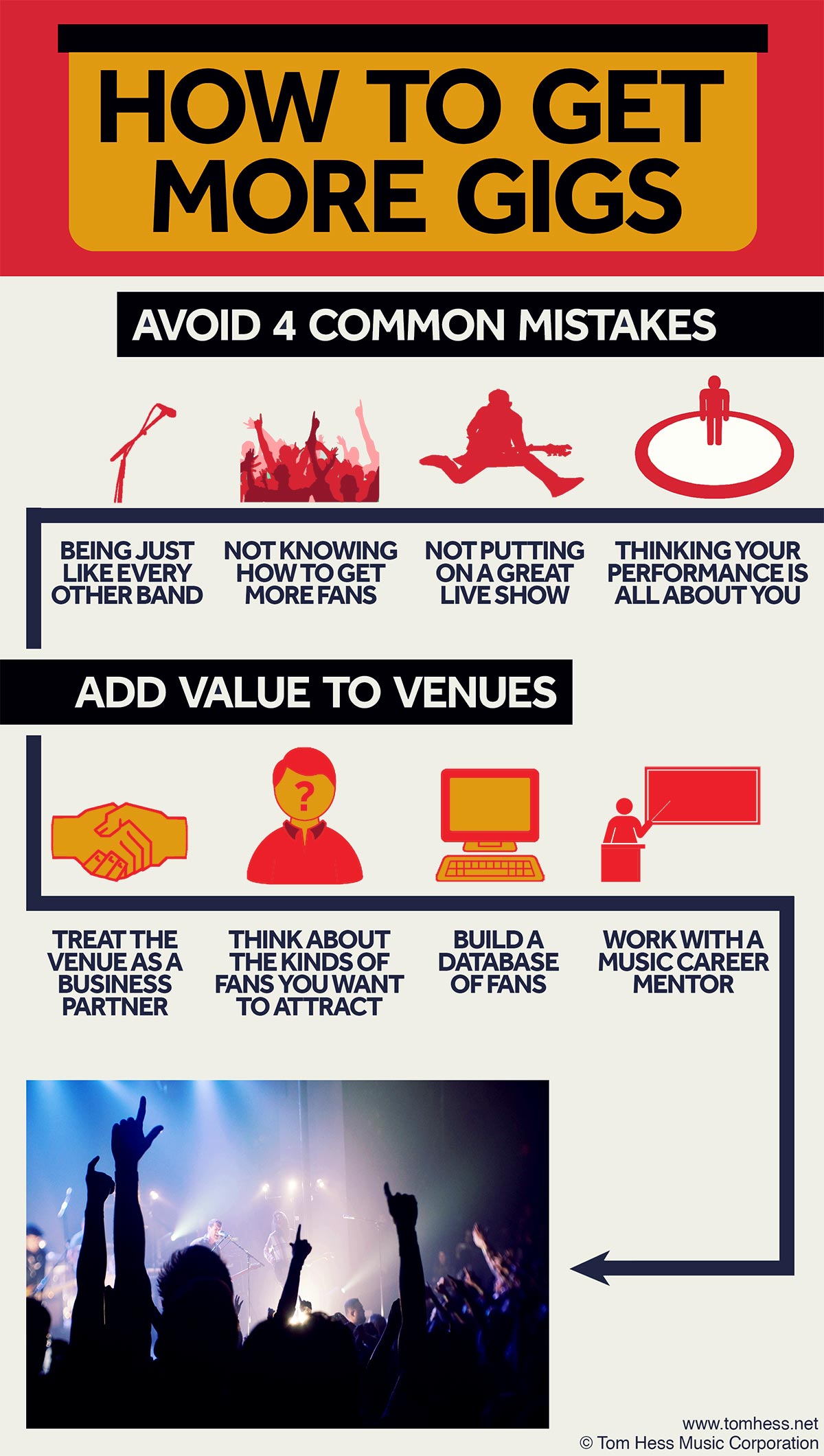
Now that you know how to select the right musicians for your band, the next step is to learn how to get more gigs and grow your band’s career quickly. Download this free eGuide on how to book more gigs & become the most successful band in your area.


Build your music career by choosing the best band members using a long-term music business plan.
