How To Clean Up Sloppy Guitar Technique And Play Guitar Clean

EMAIL TO GET ACCESS
By submitting your info, you agree to send it to Tom Hess Music Corporation who will process and use it according to their privacy policy.
If your guitar playing sounds clean in your practice room, but becomes noisy the moment you plug in at a loud rehearsal or a gig, what's causing it is almost never what you assume.
Most guitarists try fixing this problem by shopping for a new noise gate, a different amp (or maybe a better pedal).
And when that doesn't help, they do the thing they hate most and turn the gain down and pretend like their playing became cleaner by giving up the tone they want to play with.
What solves this is your technique. You don’t need new gear and you don’t need to use less gain.
Here’s the good news: you can train your technique, and the best part is, it’s FREE.
My student Craig is 59 and plays 80s metal covers in a bar band in Washington state. His set is full of Ratt, Van Halen, Iron Maiden and Ozzy tunes.
He plays that material live at full gain with the tone he wants, and his guitar stays quiet between the notes.
EMAIL TO GET ACCESS
By submitting your info, you agree to send it to Tom Hess Music Corporation who will process and use it according to their privacy policy.
9 months earlier, he sent me this:
“I don't know why my playing sounds way sloppier live than it does in my room. Maybe I need a better noise gate or amp or pedal to clean up my playing? I REALLY don't want to use less gain for my solos!”
He'd been playing a long time and he was good. That's what made this so maddening for him. He wasn't a beginner ... and yet he lost control of the guitar the second the room got loud.
I'll come back to what changed for him.
First you need to see the 4 things Craig believed about clean playing, because those 4 beliefs are the reason years of consistent practicing didn’t help him gain control over the guitar. He wasn't lazy and he wasn't short on discipline ... he simply worked on the wrong things.
Myth 1: The Right Gear Will Clean Up Your Guitar Playing And Help You Play Guitar Like A Pro
Most guitarists listen to their favorite players - who have complete control over their guitar when they play - and assume that their incredible gear enables them to do that. So, they go searching for the exact amps, pedals, pickups and other gear their favorite players use, hoping to get the same result.
 Stop The Unwanted String Noise That Makes You Sound Sloppy
The site's most-read guitar playing article and the deepest existing treatment of the muting mechanics this article references but does not teach. The natural next click for a reader who wants the how.
 Why Your Playing Falls Apart On Stage And How To Practice For It
Extends this article's central situation - playing that holds up alone and collapses under real conditions - into practice method.
 4 Mistakes Guitarists Make Before They Even Walk On Stage
Covers the preparation side of live performance, which this article touches on but does not address.
Except ... it usually doesn't. Because gear doesn't clean up sloppy guitar playing. Technique does.
Noise gates are the one piece of gear that seems like it should be the exception, and Craig owned one. It made his rhythm playing passable, because a gate can silence the guitar in the spaces between chords. But a noise gate can't do much to control noise during lead guitar playing ... so Craig’s solos stayed a mess.
But before we get to technique, you need to know that unwanted noise is not one problem. There are 3 separate sources of it.
1. Noise from the higher (thinner) strings
2. Noise from the lower (thicker) strings
3. Notes bleeding into each other
Your sloppy playing might come from 1 of these 👆3, or from 2 of them, or from all 3 at once.
These 3 sources show up in every style. It makes no difference whether you play blues, classic rock, metal, progressive rock, indie or neoclassical shred, because the strings behave the same way for everybody.
You need to use different techniques to fix each type of string noise. There is no ‘one’ universal technique that eliminates all 3.
So if you work on “noise control” or “muting” as a single skill, you will often struggle to keep your playing from sounding messy.
Here are the techniques I use for muting each of the 3 types of string noise and how each one makes your playing sound clean and pro:
The next belief is the one many guitar players try to argue with me about:
Myth 2: You Have To Turn Down The Gain To Play Guitar Clean
Fortunately, this is not true. And that means you don’t have to choose between “playing guitar cleanly” and playing with the sound that inspires you.
Craig put 1 line of his email in capital letters. He did NOT want to use less gain for his solos.
And as I told him: he didn’t need to.
Plenty of great players use a huge amount of gain because that's the sound they want. With the right technique you can too.
Here’s another reason why turning down gain is a mistake:
The more distortion you use, the more obvious unwanted string noise becomes. Most guitar players hear every bit of it at that point, and that is when they finally start working on it.
Meanwhile, practicing with less gain doesn't make the sloppiness go away. It just makes it quieter. But because your playing now sounds passable ... it’s easy to (falsely) assume that your playing is clean. And if you play live, you turn the gain back up on stage and hear all of that noise again, because none of it ever went away.
Finger rolling is where I see this most. When you use 1 finger across 2 or more strings at the same fret, the notes bleed into each other unless you release the string you just played. At low gain that bleed is barely audible.
At full gain it's extremely obvious.
So here's a question to ponder: if you recorded yourself at full volume with your normal tone, could you tell WHICH of those 3 sources your noise was coming from?
Most guitar players can't. They hear that their playing is “messy” and stop there, because telling those sources apart by ear is a trained skill of its own.
Nobody can fix what they don't know to listen for. That's true of every part of guitar technique, not just muting - which is exactly why I made a free eGuide called Guitar Mastery Decoded. Inside it you'll find a 9-step checklist for bulletproof guitar technique, so instead of guessing at what's wrong with your playing, you'll know what to focus on when you practice and improve way faster. Download your copy here:

And there is a 3rd belief that keeps guitar players from ever cleaning up their string noise. The one technique everybody names as the answer to it is really 2 different techniques that share the same name. One of them is great at its job. The other is a big part of why players like Craig stay stuck for years.
Myth 3: “Palm Muting” Is What Keeps Your Guitar Playing Clean
Guitar players believe this because they don’t realize there are 2 completely different types of palm muting.
The first kind of palm muting is muting the notes you ARE playing. That's the tight, chunky sound in rhythm guitar riffs. Palm muting is perfect for achieving that sound.

The second kind is using your palm to mute the strings you are NOT playing. That one doesn't work well. Your palm sits too close to the bridge, and your palm can’t do enough to stop a string from ringing out if it starts vibrating (especially at loud volumes if you play live).
Your picking hand thumb sits forward of your palm, which is why thumb muting does a far better job of keeping the thicker strings quiet.
And even if your palm muting were flawless, it still wouldn't silence the HIGHER strings and it still wouldn't stop notes from bleeding together. Those need completely different techniques.
Palm muting was the only kind of “muting” Craig knew how to use ... which was a big reason why he struggled to keep his guitar under control.
There's one more belief in the way, and the most diligent guitar players fall for it hardest. They think they’re being ultra-disciplined when they practice based on it:
Myth 4: Practicing Unplugged Is The Best Way To Build Guitar Technique
Unplugged practice genuinely helps you build (some aspects of) guitar technique ... and I do advise many of my students to do it.
With no amp it's much easier to hear whether your hands are in sync and whether your pick attack is even and strong.
But unplugged practice is the worst possible place to hear noise.
Unplugged notes are much quieter than amplified notes. So you hear less of the strings you’re not playing ringing out, and less of the notes bleeding together.
When you practice unplugged you hear even less of the noise than you do at low gain.
Craig was spending way too much time practicing without an amp to build his pick attack ... but this didn’t help him solve his string noise and guitar control issues.
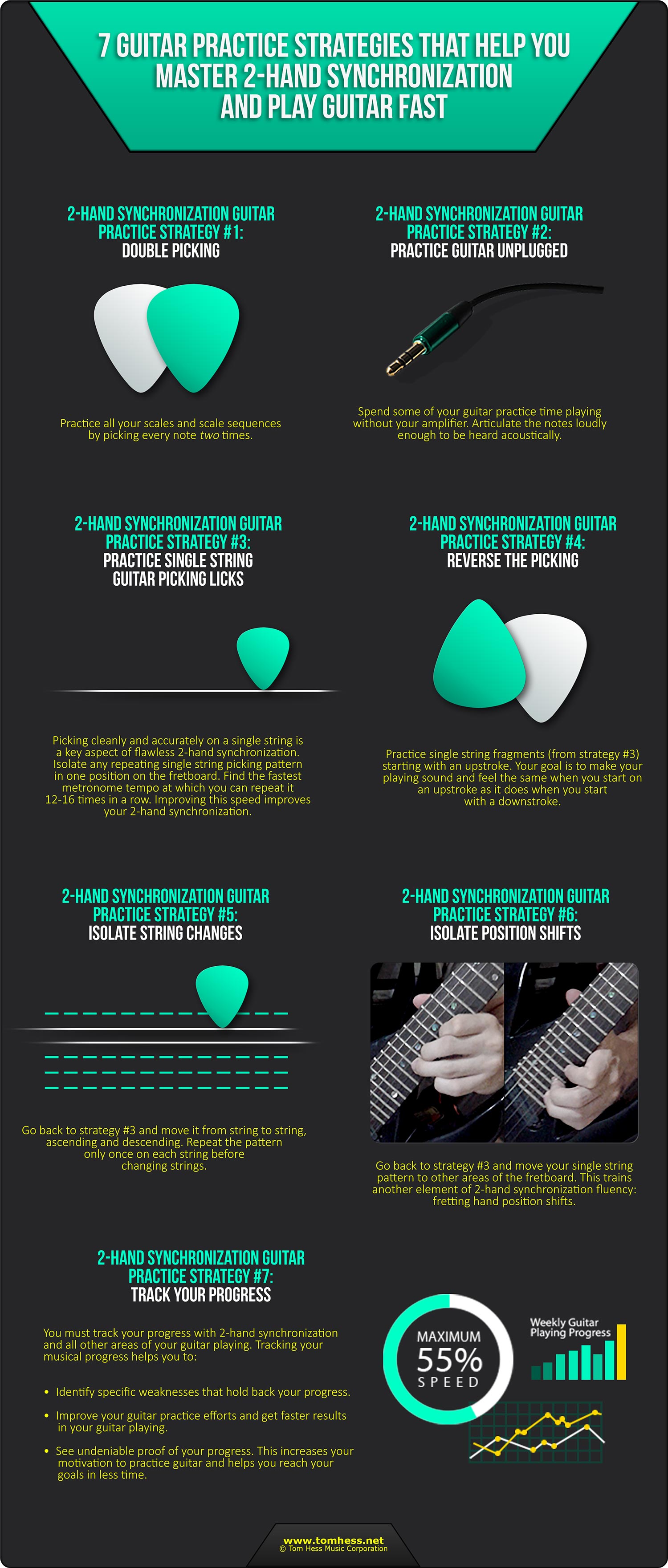
What I had him do was spend a big part of his practice time using the same tone he'd be using on stage ... and only do unplugged practice for the things unplugged practice is genuinely good for, like 2-hand synchronization.
That change made it much easier for him to hear what he was supposed to be fixing ... even though it didn't fix his playing on its own.
What Changed For Craig
He believed all 4 of these, and together they explain how a disciplined guitar player with real ability stayed stuck on one part of his guitar playing for years.
The first thing I did was ask him to send me recordings of his playing to help him finally get clarity on which of the 3 sources were affecting his playing.
That's the part he couldn't do for himself. (Like most guitarists who struggle with this problem, he'd been listening to himself for decades and hearing it all as one big mess). I, on the other hand, have listened to thousands of guitar players make these mistakes with string noise and I know what each one sounds like and how to best fix it.

Once I knew which sources were producing his noise, I gave him the specific muting techniques for each one and the exact practice instructions for how to fix them.
And about 9 months in, he sent me this excited email:
“I'm having so much more fun at our shows now and I feel so much more in control of my playing, it's awesome!!”
The difference between where Craig was then and where he is now came down to someone - me - telling him which sources of noise were holding back HIS playing, in what order to work on them, and whether he was muting each one correctly or only thought he was.
That's what I do in Breakthrough Guitar Lessons (but not just for noise control - for EVERY part of your guitar playing). I build your lessons around your skills and goals, and I keep track of your progress as we work together to continuously refine your lesson strategy and get you where you want to go most quickly.
Craig decided to end his frustrations and he is now able to play the music he loves - having way more fun on stage than he has had in years.
You can keep guessing at what's making your playing sloppy, or you can find out for certain and fix it. Click the banner below to get started: