How To Play Neoclassical Guitar Solos And Guitar Licks
Technique Much Faster
EMAIL TO GET ACCESS
By submitting your info, you agree to send it to Tom Hess Music Corporation who will process and use it according to their privacy policy.
If you love the sound of neoclassical guitar playing, but every guitar solo you try to create in that style ends up sounding like a collection of borrowed licks, there's a better way to get where you want to go ... even if you're not an advanced guitar player yet.
The clearest way I can show it to you is through what happened with one of my students.
Today, Neil is making up neoclassical guitar solos over backing tracks - his licks, not his heroes'. He only started a few weeks ago, and he's making more of them every week.
His top speed is now 172 bpm 16th notes.
Technique Much Faster
EMAIL TO GET ACCESS
By submitting your info, you agree to send it to Tom Hess Music Corporation who will process and use it according to their privacy policy.
But when Neil first contacted me about 9 months ago, his guitar playing was very different.
He was 54, from New Mexico, and he'd spent 11 years teaching himself. (He started playing at 43, in case you're wondering whether it's too late for you.)
His technique was impressive. He could play clean 16th notes at 158 bpm, which is a lot faster than most self-taught players ever get.
But his other skills were nowhere near that level.
He didn't really know the fretboard, and he knew very little about how music works. He knew the first couple of shapes of the harmonic minor scale ... and he spent his practice time on exercises and excerpts from his favorite solos.
And the faster he got, the more obvious his weakness became: he couldn't use that speed creatively when soloing over a backing track.
He told me:
"I can get through quite a few of the fast parts of my favorite Yngwie songs clean. But put on a backing track and tell me to just play something and I've got nothing. It's driving me nuts."
The way Neil got from there to where he is now wasn't what most guitar players would guess. I'll walk you through it one stage at a time.
What I Saw In Neil's Guitar Playing That He Couldn't
Neil was learning guitar linearly.
He was waiting until he could play 16th notes at 200+ bpm before he'd let himself work on music theory, learn the fretboard and start using his speed to make music.
When I asked him why 200, he thought about it for a second and said he didn't know. It was just the number he'd had in his head for years.
So he spent 85-90% of his 90 minutes a day on technique and speed. Every one of those hours was an hour he didn't spend learning to use the speed he already had.
Learning this way is very common among ambitious guitar players with a strong work ethic. It feels like the disciplined way to learn: master one thing completely, then move on to the next.
But you won't get good at guitar that way. You can't finish mastering a skill until you connect it to your other skills and learn to USE it in real music. That means working on several areas at the same time and bringing them up together.

Once Neil saw how his approach to practicing was holding him back, he had to decide what to change ... and the 2 choices most guitar players make in that situation are both wrong.
Why I Didn't Tell Neil To Stop Building His Speed
When guitar players realize their playing is out of balance (the way Neil’s was), there are 2 directions most of them go.
They ignore it and keep doing what they've always done: make their strengths stronger and leave their weaknesses alone.
Or they go to the opposite extreme. They put their technique on hold and work ONLY on the areas they've neglected ... and lose some of the skills they spent years building.
I didn't do either with Neil.
He kept building his speed, because speed was both important for the music he wanted to play and something he wanted to get better at. But at the same time, I gave him easy ways to start making simple neoclassical guitar solos with the chops he already had.
One of the first things I had him do was learn to play over the circle of fifths - a chord progression Bach and other Baroque composers used all the time, and one that neoclassical guitar players still use constantly. Here's how simple the starting point can be:
You don't need anywhere near 172 bpm to play anything in that 👆 video. The first solo is a simple 4-note lick you move from chord to chord, and it sounds neoclassical even when you play it slowly. Neil could play all of it the first day ... and so can a player with a fraction of his speed.
You can start making music in a style long before your speed is where you want it to be. (And this isn't only true for neoclassical guitar playing. It's true whether you play blues, classic rock, metal, prog or indie.)
But as soon as Neil started using his speed to make music, he ran into a problem he hadn't expected.
Why Neil's Neoclassical Guitar Licks Sounded Like Exercises
 Easy Neoclassical Guitar Licks In The Style Of Yngwie
Simple harmonic minor licks in the style of Yngwie Malmsteen that sound great whether you play them fast or slow.
 Yngwie-Style Arpeggios You Don’t Have To Be Advanced To Play
If you like the arpeggios Yngwie Malmsteen and Jason Becker play, these licks go far beyond playing a shape up and down.
 Neoclassical Pedal Point Licks You Can Create Yourself
Pivot pattern licks in the style of Yngwie Malmsteen and Vinnie Moore, plus how to create licks like them on your own.
Once Neil started soloing over chord progressions, almost everything he played sounded like an exercise instead of a guitar lick.
He knew plenty of neoclassical licks, and he could play them fast. But he played each one exactly the same way every time ... and over a backing track, he sounded like he was practicing instead of making music.
So I worked with him on creating variations of the licks he already knew. He changed the phrasing of each lick (even the fast ones) to make it sound different.
Once Neil had made a few variations of a lick, he stopped playing it the same way every time. He could change it to sound musical over whatever backing track he was soloing over.
Then I trained him to create new licks of his own with every technique he knew (and was learning), from scale sequences and arpeggios to legato, slides, bends, harmonics and vibrato.
Instead of playing the same handful of licks he'd learned from other players, he now had far more ideas to choose from whenever he soloed.
Making His Strongest Guitar Playing Skill Even Stronger
While all of this was going on, I kept training Neil's technique. Even though speed was his biggest strength, he had a long way to go until he could play at the level of his favorite neoclassical guitarists. So I wanted him to keep building his speed while he learned to use it.
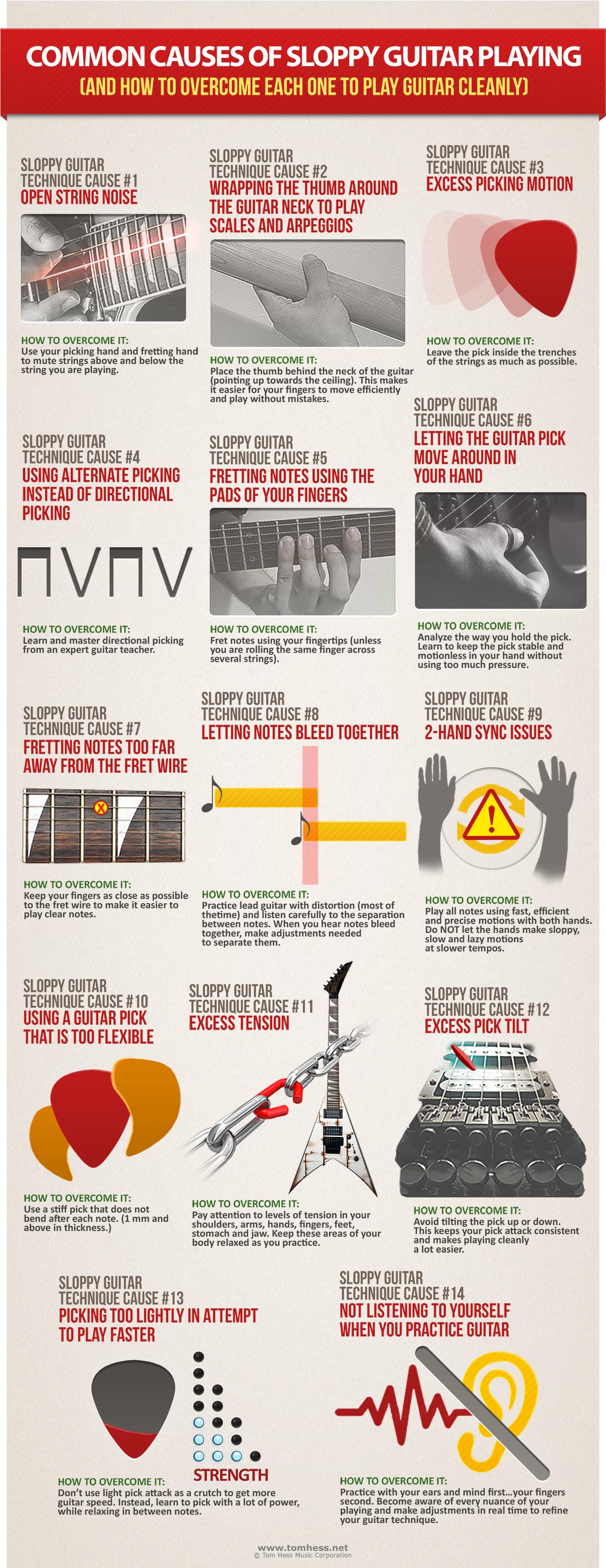
At his top speed, his playing was also sloppy. He didn't articulate every note the same way, he picked more softly when he played descending than when he played ascending, and some of his notes bled together.
When I listened to him play, I could hear that he was letting his pick move around in his hand. That made him miss notes sometimes, and it made his 2-hand synchronization sloppy.
He was also sometimes collapsing the knuckles of fingers 2 and 3, which made some of his notes sound unclear and muffled.
I watched him play and corrected both of these problems.
As for the notes bleeding together, Neil expected he'd have to do lots of slow practice to clean them up.
He didn't need to. I walked him through how to do finger rolling correctly, and he cleaned up the bleeding notes without all that slow practice.
Then I turned to his tension.
One reason Neil was stuck at 158 bpm was that he was using too much tension in his hands.
Too much tension is why fast playing often feels hard and sounds sloppy, and most players don't notice how much of it they have.
Guitar players can have 9 different sources of tension in their playing. Most have several of them ... and only notice 1 or 2.
I worked with Neil on getting rid of the tension in his playing one source at a time, so he could play faster without straining.
Ask yourself this: do you know which sources of tension are in YOUR playing right now ... or are you guessing?
If you're like most guitar players, you probably have tension in your playing that you don't know about - and you can begin relaxing it today.
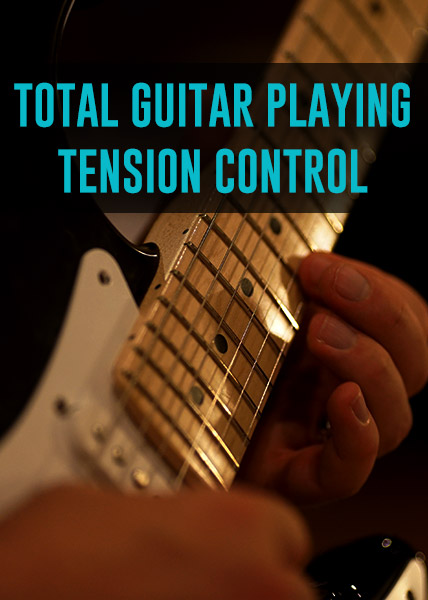
I made a free video class called Total Guitar Playing Tension Control. It shows you which of the 9 sources of tension you have, how to get rid of them one by one and how to practice so they don't come back.
The Day Neil Heard His Own Neoclassical Guitar Solo
A little under 9 months after Neil first contacted me, he sent me a recording.
It was his first solo over the circle of fifths progression. It wasn’t some lick from a record or anything I’d shown him - every note was his.
And it sounded like music. His licks fit the feel of the backing track: its tempo, how fast the chords changed and the emotion of each chord. He also played much more cleanly at his top speed than he could when he first contacted me.

He wrote:
"I must've listened to it 6 or 7 times. It sounds like the records I've been listening to since high school. And I made it up."
I told him how proud I was of the progress he'd made. Then I told him what we'd work on next to make his playing sound more like his neoclassical heroes, starting with his vibrato, which still needed work.
How To Turn YOUR Guitar Playing Into Music Of Your Own
You just saw what it looks like when someone gets guidance at every stage.
If you're the guitar player who has spent years building lead guitar skills and still can't turn them into music of your own, Breakthrough Guitar Lessons are for you.
The decisions I made with Neil were about HIS playing.
What to keep improving, what to start using in real music (and how) - those answers depend on YOUR playing, YOUR goals and YOUR practice time.
Inside Breakthrough Guitar Lessons, I make those decisions with you. I create your lesson strategy to give you clarity on what to practice (and how) ... while giving you feedback every step of the way to help you become the guitar player you want to be, the same way I did with Neil.
Where Will Your Guitar Playing Be A Year From Now?
If Neil had kept going the way he was, he might have become a slightly faster player. But he'd still be learning other people's licks, and he'd still be putting off having fun making music for many more years.
Instead, he's making up neoclassical guitar solos over backing tracks, and he's having more fun playing guitar than he's ever had.
A year from now, you could be listening back to a solo you made up yourself. Or you could be right where you are today, still unable to play music of your own.
To find out how I can help YOU get there, click the button below.