Music Business Tips On How To Start Your Music Career Now
The 7 Specific Steps To Build A Music Career While You Still Have A Day Job - No Matter Your Age, Family Situation, Or Skill Level

By submitting your info, you agree to send it to Tom Hess Music Corporation who will process and use it according to their privacy policy.
If you want a music career but you’ve got a day job you can’t just walk away from, a family depending on you, and a voice in the back of your head telling you it’s too late to start … I'm going to show you how to build one anyway.
Let me start with a story about a musician I mentored:
Today, Mark F. earns $82,000 per year from three different music income streams: gigging, studio work, and selling offers to his email list of fans.
To be fair, he makes slightly less than he did at his IT job before.
But he’s working fewer hours. His income is much safer (because it’s not dependent on any one source). And he gets to spend his days doing what he actually loves.
But when Mark first contacted me 22 months ago, things looked very different.
He was 51. Married, with a daughter. Living in Phoenix.
Working 55 to 60 hours a week at his IT job. He’d played classic rock guitar since he was a teenager.
Every time he thought about doing something more with his music, several beliefs stopped him: he was too old for this now. He felt he had too much responsibility and couldn’t afford to gamble his family’s stability on a dream.
He told me: “I've been thinking about this for years. Honestly, decades. I'll be on YouTube watching some guy my age who's actually doing it ... and I'll think ... alright, that could be me. And then it's Monday morning and I'm back at the office, my wife's asking about the mortgage, my daughter's got dance class, and the whole thing just feels ... I mean, where would I even start? At 51? With everything on me?”
You're not alone in this - whether you're 30, 50, or 70. And you're not too late. ('Too late' isn't even a real category - it's a story you've been telling yourself.)
By submitting your info, you agree to send it to Tom Hess Music Corporation who will process and use it according to their privacy policy.
I’ll show you exactly what Mark did, and how it actually played out, later in this article.
But first, here are the specific music business steps he took to start his music career.
The same steps you can start taking this week, while still employed, without quitting anything, and without risking your family’s stability.
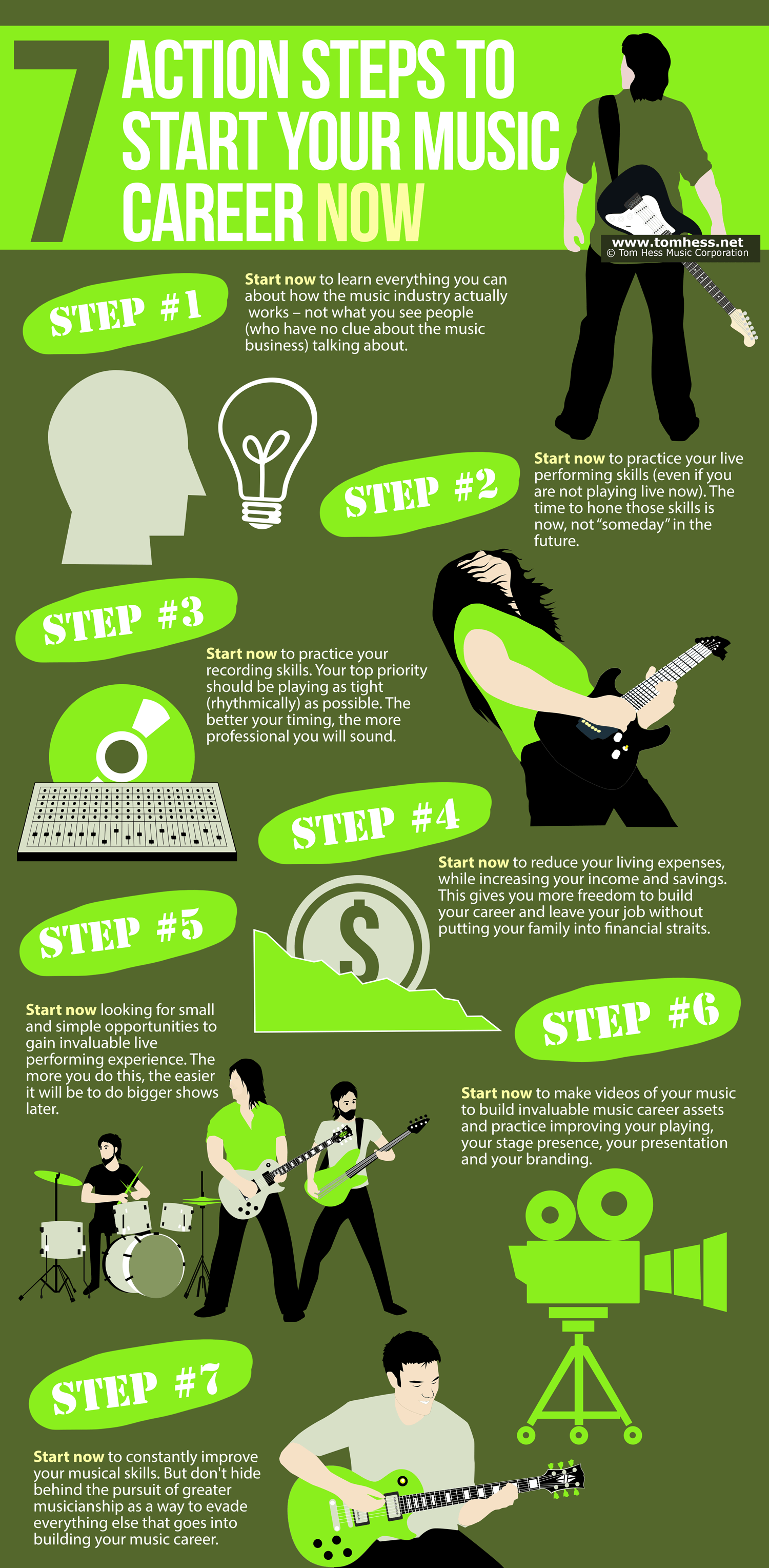
Tip 1: Learn How The Music Industry Actually Works
Start now to learn how the music industry actually works. Because most musicians who want a career have a picture of the industry in their head that's wildly wrong - and that picture is exactly what keeps them stuck.
Three beliefs I hear over and over:
“It’s about getting lucky.” They think a music career is about being in the right place at the right time to catch one big opportunity that takes them from nobody to star. That’s not how the industry works. That’s the mindset of someone looking for a hack.
“You either make it big or you’re a starving artist strumming for coins.” They think there are only two outcomes: rockstar on a stadium tour, or busker on a street corner. Nothing in between.
“I’d have to quit my job and go to zero income to do this.” They think building a music career requires torching their current financial life and living on ramen for a few years.
With a family, obviously that’s not going to happen. So they don’t start.
All three beliefs are false. And they’re connected. If you think it’s all about luck, and if the only outcomes are “huge” or “broke,” then yes, of course, the only way to even try is to risk everything.
Here's what most musicians thinking about a music career have never been told:
There’s a MASSIVE middle class in the music industry.
Musicians earning $50,000 to $150,000 per year, most of them through multiple income streams. Any one of those streams by itself isn’t much. But stack four or five together and you’ve got a livable income, one that’s much more stable than a single day job (because if one stream dips, the others keep going).
And the path to getting there isn’t about quitting your job and praying for a miracle.
It’s about starting small while you still have your day job, building one stream at a time, and gradually replacing your current income over months and years. Mark did exactly this over 22 months (we’ll get back to him).
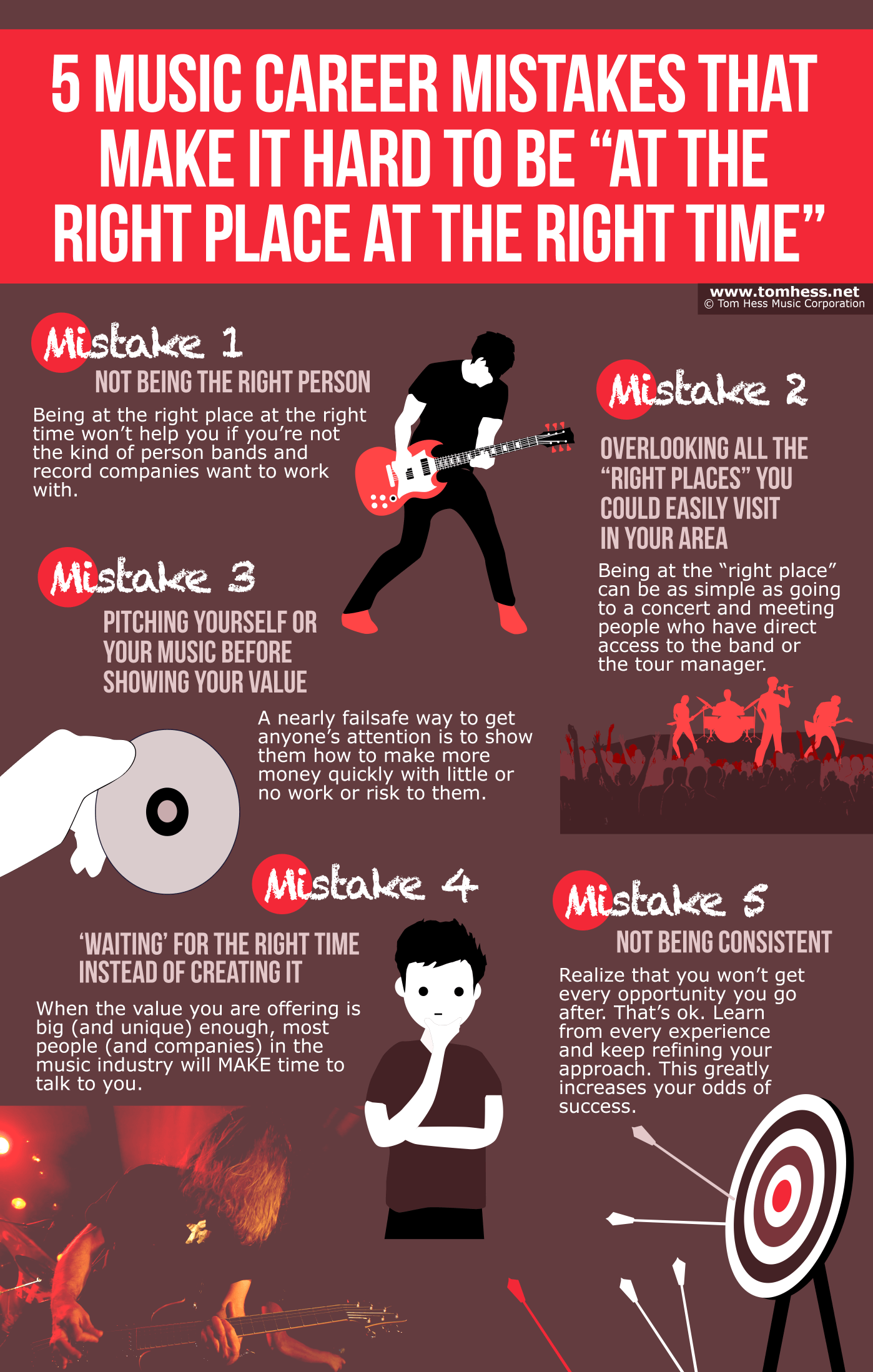
Once you see the actual shape of the music business, you can stop waiting for a lucky break and start building something real.
But you also have to know how to PERFORM what you’ve built. And this is where most musicians overestimate how ready they already are.
This brings us to Tip #2, which is:
Tip 2: Practice Your Live Performing Skills At Home
Start now to practice your live performing skills that you'll need as a professional musician.
Even if you’re not playing live yet, this is one of the most overlooked music career skills a musician can work on.
Here’s a truth most musicians don’t want to face:
There is always a difference between your home skill level and your live skill level.
Most musicians don’t realize this until they walk onstage the first time … and then they’re devastated when they can’t pull off what they do easily at home.
Watch this video for one of the main ways you can start closing this difference before you ever play your first gig:
Now here’s the part most musicians miss.
Whatever you can pull off at home, you're going to play under that level the moment you walk on stage. Most musicians don't plan for this - they get on stage trying to play at 100%, and they fail.
But how much room you need is different for every musician. It depends on YOUR style, YOUR weak spots, and the kind of venues you'll eventually be playing.
Figuring this out by yourself is hard. You'll either over-correct - playing so far below your actual level that your sets come out lifeless - or under-correct, hit the stage at 100%, and bomb.
Either way, practicing the right way at home is only half of what you need. You also need real experience playing in front of real people.
Don’t try to play your maximum difficulty material in this setup. Play slightly below your maximum at home, because you need that extra margin for when you’re actually under performing pressure.
If you try to play at 100% of your home ability on stage, you’ll fail. You have to have room to drop.
Practicing live skills this way is something you can start tonight. But it’s only half of what you need. You also need real experience playing in front of real people.
Here is how to do that:
Tip 3: Look For Small Live Performing Opportunities
Start now looking for small, simple live opportunities to get real music industry performance experience.
Put what you’ve been practicing at home to work in front of actual people.
Most musicians hit a wall here. Because the opportunities available to someone who’s just starting don’t LOOK like “real” gigs.
They (often) don’t pay. Sometimes you even have to pay to play (for example, opening for a bigger band and paying them for the privilege of performing in front of their fans for 20 minutes).
And most musicians think this is beneath them. “I’m a serious musician. I’m not playing for free. And I’m definitely not paying someone to let me play.”
So they wait for a paid gig at a real venue … and that gig never comes. Because they don’t yet have the experience, the audience, or the reputation to get booked.
Here’s the reframe: playing for free (or paying to play) isn’t below you. It’s an AD.
Think about it this way. When a business wants to reach new customers, they run ads on YouTube or Instagram.
They pay for the privilege of getting their message in front of an audience. That audience either becomes customers (which more than pays back the cost) or doesn’t (which means the ad was a loss, but the business learned something).
An opening slot or a free set is the same thing.
You’re paying (with your time, with a small fee, with a gas tank) for the privilege of putting your music in front of people who might become fans. If you capture them onto your email list, the long-term value of each fan can be a thousand times what the gig cost you.
That’s how the musicians I described earlier actually build their careers. One small opportunity at a time. Not one big gig that launches everything.
What "small" actually looks like for YOU depends on your city, your style, your current network, and what's realistic given your skill level.
Picking the wrong starting opportunities is one of the most common reasons musicians spin their wheels.
The size of the audience matters less than the fact that you're playing for a real audience. (Plus, you're getting to live the dream of feeling like a pro musician much sooner!)
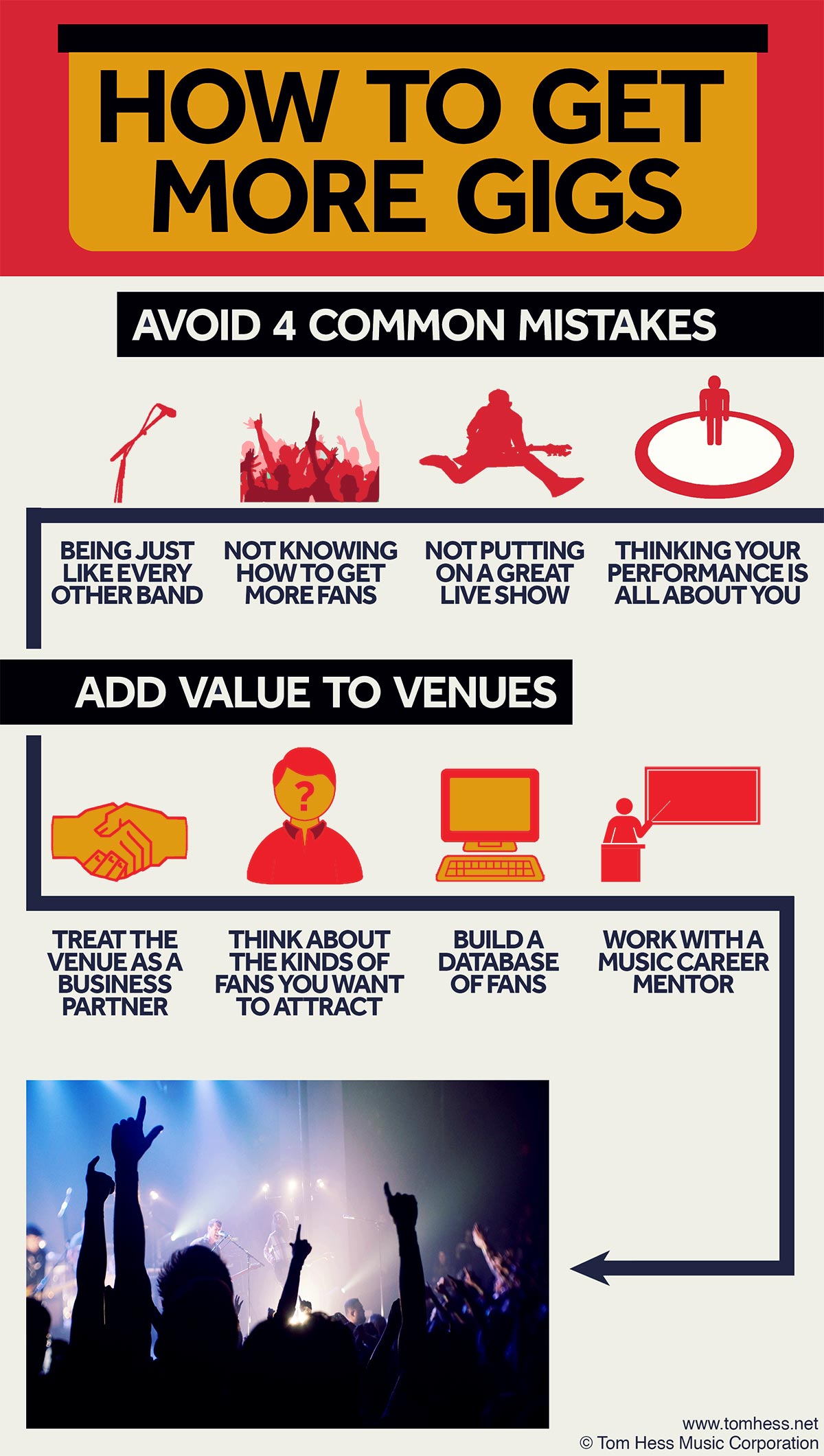
While you’re building live performing reps, there’s another kind of performance skill you need to be developing in parallel.
And most musicians have no idea how specific those skills actually are …
Tip 4: Practice Your Recording Skills
Start now to practice your recording skills to prepare yourself for the music industry.
This is another essential music career skill most musicians get wrong for years because they’ve never been told what to focus on.
The two things that separate professional recordings from amateur recordings are simple: timing and phrasing. In that order.
Playing tight with a click track sounds like it should be easy. In practice, almost no musician does it well the first time they try. The moment you turn on a click and record yourself, you’ll hear things you had no idea were wrong.
I’ll give you two quick examples that are common among guitar players (since that's the instrument I play):
Vibrato that isn’t in time with the beat. When you add vibrato, the pulses of that vibrato need to be in strict divisions of the beat: quarter notes, eighth note triplets, sixteenths. Most guitarists do vibrato by feel.
The result is vibrato that floats against the click, which sounds amateur.
Palm muting that varies randomly. Most guitarists palm-mute with an intensity that changes from aggressive to mild to nearly open, completely at random. This sounds sloppy on its own.
(And it gets much worse when you double-track a rhythm part … because you end up with two slightly different takes, each with different muting variations, played seconds apart.)
No matter what instrument you play, there are similar types of non-obvious mistakes that separate pros vs. amateurs.
But which of those mistakes actually matter is different for YOUR style than for anyone else's. The non-obvious problems holding back a blues player are not the same ones holding back a metal player. Most musicians can't tell which differences in their own recordings are the ones costing them, and which ones nobody would ever notice. So they spend a year fixing things that don't matter and never touch the one thing that actually separates them from the pros.
Practicing recording (and then comparing your recording to the recordings of pros in your style) will help you identify (and fix) the differences between your recordings and theirs.
The goal isn’t to make a professional-sounding album this week. The goal is to start building the ear and the muscle memory you’ll need when you do get in a real studio, so you’re not spending your first studio session relearning everything while the clock is running.
Before you start checking these tips off one by one, ask yourself this:
Are you READY to pursue a music career?
I don't mean: "ready as a player". I mean whether you're ready in the specific ways that decide whether the work you do over the next year goes somewhere ... or whether you do everything right and still end up exactly where you started.
Most musicians never ask themselves this question. They just start working. A few years later they're wondering why nothing came together.
I put together a free 15-question readiness assessment that walks you through every factor that matters. By the end you'll know where you stand - and which of the seven tips above is the right place for YOU to start. (Because it's different for different people. Starting with the wrong one is the most common reason talented musicians waste a year and quit.)
But there's still a music career skill most musicians actively avoid - because it makes them face something they've been hiding from:
Tip 5: Make Videos Of Your Music
Most musicians resist video at the start of their music careers because they don’t think they’re “ready” to record themselves.
If you're thinking about a music career - you ARE ready. (Or you're as ready as you need to be to 'start'.)
And you can learn a tremendous amount about yourself by analyzing what happens when you press record, play, and then watch yourself back.
Most people assume the main thing they’ll notice is their mistakes.
And you will, but it’s not the mistakes you already know about. It’s the ones you had no idea you were making.
When you put yourself in front of a camera, you’re playing under pressure that isn’t there when you’re just practicing.
Things you could do easily when you were relaxed suddenly go wrong.
What you realize is this: there’s a whole layer of skill you haven’t been practicing. The skill of playing consistently WHILE something (the camera, the audience, the studio) adds pressure.
That’s not a playing skill. That’s a performing skill. And it has to be trained separately.
There’s a second thing that happens when you watch your own videos: you realize how you LOOK.
Most musicians play like they’re not being watched.
Technically, the playing might be excellent. Visually, it’s boring to watch.
A trained eye catches this in five seconds. You won’t see it in yourself, because you’re inside the performance. But a mentor or coach watching your footage can tell you: “Your playing is technically great, but nobody’s going to stop scrolling to watch this, because you look like you’d rather be somewhere else.”
Your phone is enough to start. What's NOT enough is your own judgment about what you see when you watch the playback. Most musicians watch their footage - decide they hate it - and never make another video. Not because they're bad on camera, but because they have no idea which of the dozen things they're seeing actually matter (and which of them they couldn't see at all).
Get past that, and the videos themselves start working for you - playing under pressure gets easier, presenting yourself gets sharper, and the files build up as real assets you can use for social media, for booking, or just to look back on six months from now and see how far you've come.
But here's something about this tip most musicians miss: it only works if Tips 2 and 4 are already in motion.
Without Tip 2's pressure training, the camera triggers so much anxiety that the playback shows you nothing but mistakes you'd never make at home. So all you'll be doing is watching yourself panic. Without Tip 4's recording work, the playback drowns in timing and phrasing problems that crowd out everything else, so you fixate on those and never reach the performing-skill issues video is supposed to surface.
Try to do Tip 5 in isolation and it won't do what it's supposed to do. Most musicians conclude video doesn't work for them, when really the foundation those videos were supposed to rest on isn't there yet.
And speaking of progress, there's one more thing the pros track that most musicians refuse to touch. Because the math doesn't look anything like making music ...
Tip 6: Reduce Your Expenses And Build Your Music Career Runway
Start now to reduce your living expenses, increase your income, and build up savings. This is the music business step most musicians skip, and it’s the one that keeps them saying “someday” for decades.
Here's why runway matters:
Imagine you get asked to spend a month in a studio recording an album. You're not getting paid for that month (or you're paid, but not for many months into the future). Can you cover your bills back home?
 Facts & Myths Of The Music Business
Learn how 3 big lies about the music industry can kill your music career.
 How Secure Is Your Music Career?
Test the effectiveness of your path to being financially secure in music.
 How to phase out your day job
Learn how to transition from a day job into a music career.
Imagine you get asked to tour for six weeks. As a newbie, you'll probably make close to nothing. Can you cover your bills back home?
If the answer to either question is no, you're going to turn down opportunities that could launch your career.
Most musicians never realize how many opportunities they're passing up because they can't afford to take them.
Here's the pattern I see playing out over and over.
A musician notices that money is tight. So, they try to earn more by working extra hours at the day job or some side gig. That works for a couple months, but somehow they're back at zero by the end of every month.
So they switch to cutting expenses - drop a subscription or two, cook at home more, postpone a gear purchase, say no to small impulse buys. That helps some, but the savings never quite become a real runway.
So they go back to trying to earn music income directly. They imagine one big music income covering their bills, and search online for how to get there. None of what they find feels like it applies to THEM - and if some of it does, they can't tell which one to start with.
If nothing changes from there, the next year or three look exactly like the last year or three. More cycling between 'earn more' and 'save more.' All the things intelligent people do when money's tight, and still no runway when the first real opportunity lands in their inbox.
Most musicians thinking about a music career get the financial preparation wrong in predictable ways.
They picture saving money as the whole job, when it's actually the smaller half of the equation.
They miss tax advantages they have access to as self-employed musicians (the kind that add up to thousands of dollars a year).
And they picture one music income replacing one day-job income, instead of stacking multiple smaller streams the way the middle class of the music industry actually builds a living.
Mark built his music income exactly this way. Today, he earns $82,000 per year from three independent income streams. No single one would be enough on its own. But together, they're getting close to beating his old IT salary - while being significantly safer than a single day job.
Which of those is the biggest issue for YOU - and what to actually do about it given your income, your expenses, your family, and your city - is a different question for every musician. The patterns are predictable … but the right corrections for YOUR situation are not.
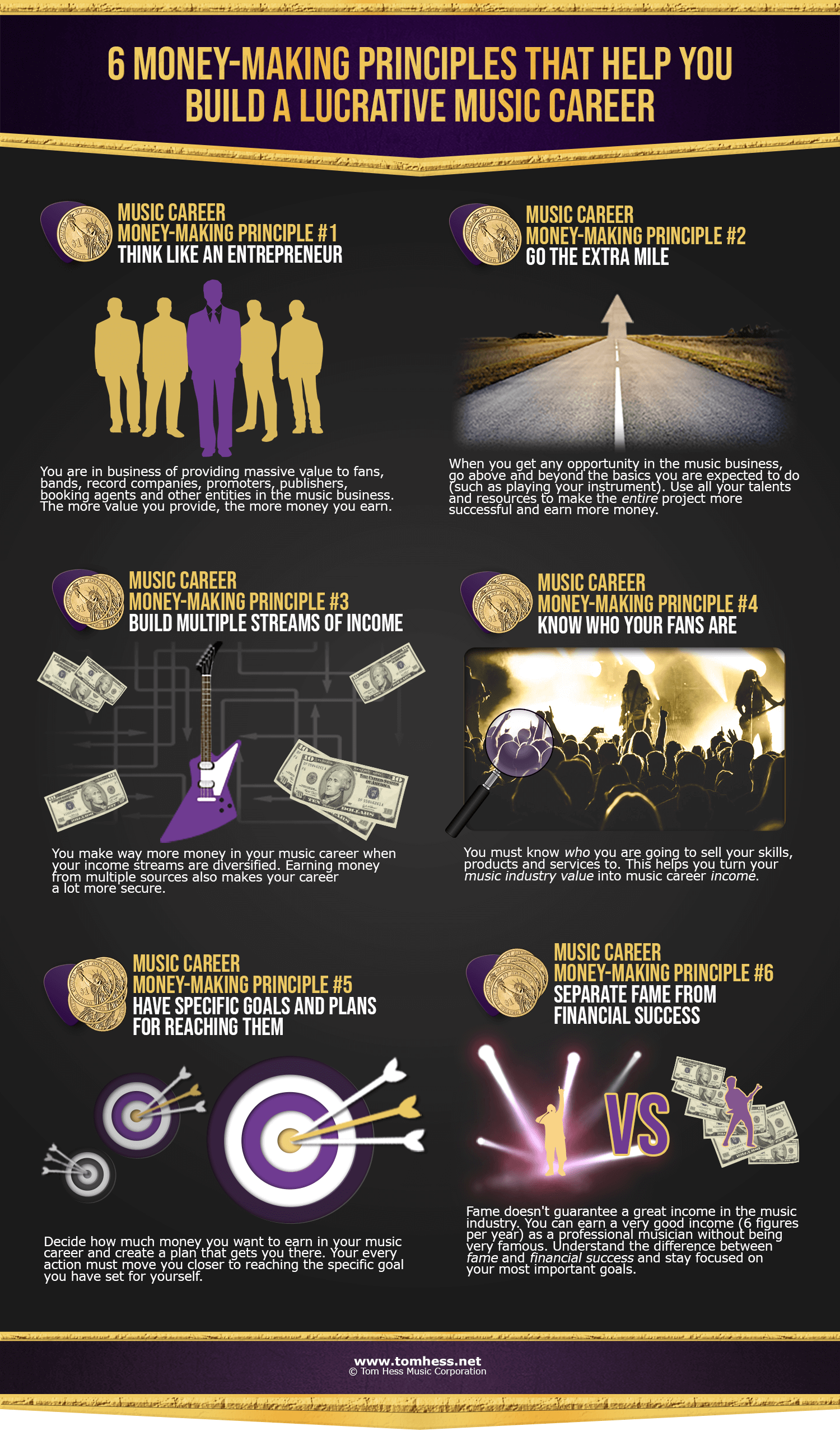
Runway and diversified income matter. But only if you’ve dealt with the biggest trap talented musicians fall into.
And the next tip could be the reason you’re still reading instead of already building a career …
Tip 7: Constantly Improve Your Musical Skills (And Don’t Hide Behind Them)
As you're starting your music career, work to constantly improve all your musical skills: playing, improvising, rhythm, phrasing, songwriting, soloing, even singing backup vocals.
The stronger your skillset, the more musical value you bring to any music career opportunity that comes your way.
But here’s the warning I need to give you. Because I see more talented musicians stuck at this one than anywhere else:
Do NOT use “improving my musical skills” as a way to hide from the career work.
I call this the practice bunker. Musicians stay inside it because it feels safe. Practicing is productive, it's measurable, it's familiar. Career work is none of those things - which is exactly why the bunker is so attractive.

This is the single most common trap for talented musicians. They tell themselves they’re “not ready yet.” They need to practice more. They need to nail one more technique. They need to write a few more songs. And THEN they’ll start doing the career work.
A year passes. Then two. Then ten. Their playing gets better … but they still don’t have a career.
What's really going on underneath? Usually something the musician can't see in themselves - which is the whole problem.
Sometimes it's ego protection. They don't feel ready to put themselves out there until they can play at the level of their heroes, so they stay in the practice room where they're safe from judgment.
Sometimes it's grunt-work avoidance - because building a career is NOT all fun music work, and many musicians assume the pros don't do that work since they can't see it happening. (The pros do more of it than anyone else. They just do it behind the scenes.)
Sometimes it's something deeper and uglier - a belief that making real money from music compromises their integrity as artists, or that suffering is somehow noble for a musician. Few will admit this one out loud. Some don't even know they hold it.
But here's the problem with all three of these:
You can't tell which one is YOURS when you're inside it. That's not weakness, and it's not laziness. From inside, every story you tell yourself about why you need to keep practicing instead of starting feels like a real reason. The pattern only becomes obvious when someone watching from outside points it out.
Musical skills alone will do NOTHING for a music career. If skill alone were the ticket, every high-level player who posts videos on YouTube would be signed, touring, and earning a full-time living from music. Most of them aren’t, not even close.
So start now. Tonight. With whatever tip on this list feels most doable right now, no matter how small.
Which brings us back to Mark …
What Actually Happened With Mark
I told you at the beginning that Mark came to me 22 months ago. Here’s how that played out.
When we first talked, Mark had been thinking about doing something with his music for most of his adult life. Decades. He had the musical ability. What he didn’t have was a plan he could actually execute while keeping his family’s financial life intact.
Remember what he told me: “I've been thinking about this for years. Honestly, decades. I'll be on YouTube watching some guy my age who's actually doing it ... and I'll think ... alright, that could be me. And then it's Monday morning and I'm back at the office, my wife's asking about the mortgage, my daughter's got dance class, and the whole thing just feels ... I mean, where would I even start? At 51? With everything on me?”
That’s the trap. He wasn’t short on talent. He was short on a path.
Here’s what he was expecting from me, and what he didn’t get.
He was expecting a tactical move. A specific strategy, a clever shortcut, some hack that would accelerate the timeline and make the whole thing happen faster. Most musicians who contact me are looking for exactly that.
It doesn’t exist.
What I gave Mark was different. I walked him through a version of the seven tips above, but with specific direction and ongoing feedback built for HIS situation: his existing skills, his income, his family, his city, his classic rock focus.
Then I gave him something he hadn’t given himself. Permission to start much smaller than he thought was acceptable. The tips above are “starting small.” At first, Mark thought even those were too small to matter.
And then he did the work.
He joined my Music Career Mentoring Program. He committed. He did the assignments. When he hit a wall, he asked for help instead of going silent and quitting. He showed up consistently for 22 months.
There was no magic bullet. There was no hack. There was a path, and he walked it.
Twenty-two months later, he's fully out of his IT job. $82,000 a year from three music income streams.
Working less than he used to. Living a life that’s more diversified, more stable, and far more fulfilling than the one he had when he first contacted me.
The Part You Can't Solve Alone
I know this is about to sound self-serving. It’s unavoidable, because the honest answer to something is sometimes “yes, you probably need to work with me on this.”
I gave you the seven things to start doing now to build a music career. Those tips are real. They work.
But there are things a free article physically cannot do.
It can’t look at YOUR specific skills, YOUR situation, YOUR current income, and YOUR realistic timeline, and tell you which of these seven tips matters most for you right now.
It can’t tell you what order to build them in. It can’t tell you what to cut, what to double down on, or what you’re about to get wrong that you can’t see.
It can’t give you a person to ask when you hit a wall and feel like quitting.
It can’t push back when you’re kidding yourself about progress.
It can’t give feedback on the actual work you’ve done, so you can course-correct before you’ve wasted months going in the wrong direction.
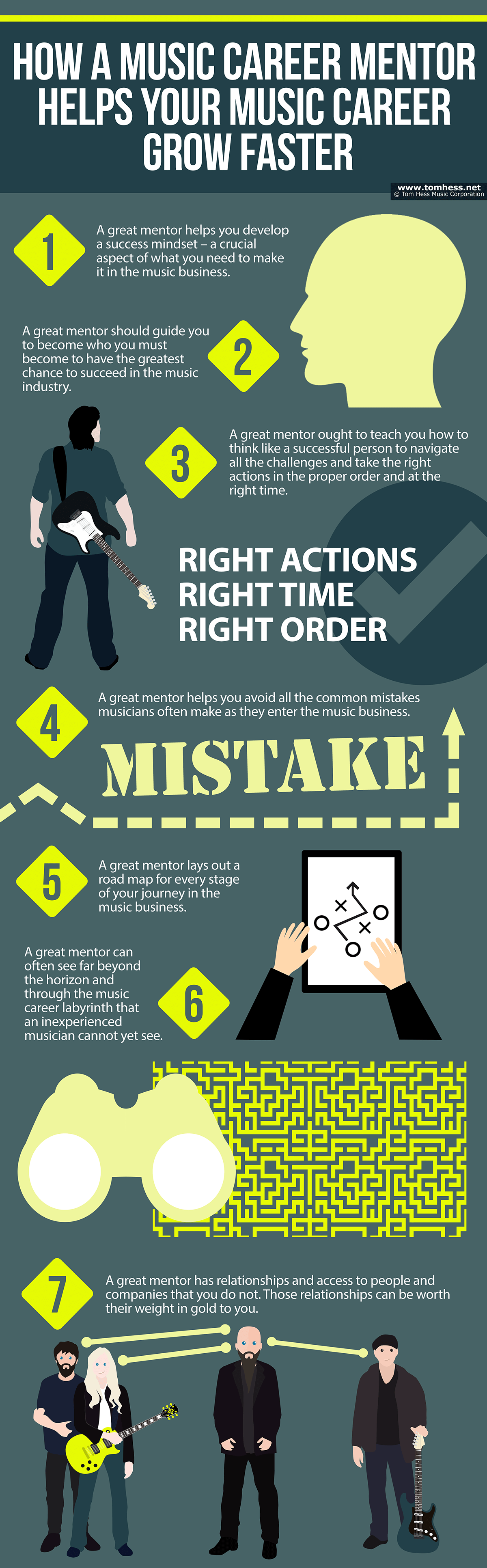
That’s what the Music Career Mentoring Program is built to do. It’s what Mark joined, and it’s what made his 22-month transition possible. If you look at his story and think “that’s the kind of move I want to make in my own life,” MCMP is what I built for musicians like you.
A Year From Now
22 months ago (at the time of writing this), Mark was 51 years old, working 55 to 60 hours a week at his IT job, telling himself he’d never figure out how to do music as his actual career.
Today he doesn’t have to tell himself that anymore. Because he did figure it out.
A year from now, you could be somewhere close to where Mark is now. Not identical, your version. Your streams, your sound, your city, your timeline. But the same KIND of transition: out of the "someday" trap, into something you actually built. Watching a room of strangers sing along to a song you wrote, while a check from your last session lands in your account.
Or a year from now, you could be exactly where you are today. A year older. Still watching another guitarist on YouTube doing what you keep promising yourself you'll start.
The difference between those two futures is one decision, made today, to start.
Start with the smallest possible version of any one tip on this list. It doesn’t matter which. What matters is that you start.
Or take a few minutes to find out whether you're actually ready to pursue a music career:
Start building a music career by training with a music career mentor.
