How To Write Guitar Melodies That Stick In People's Heads
Emotion To Any Guitar Lick

EMAIL TO GET ACCESS
By submitting your info, you agree to send it to Tom Hess Music Corporation who will process and use it according to their privacy policy.
If you've worked on your guitar technique for years but feel lost the moment you try to write a melody, here's the good news:
Learning how to write guitar melodies that sound pro is a lot simpler than most players think.
And it's very important for guitar soloing, too.
The better you are at writing melodies, the easier it becomes to:
- Play (and improvise) expressive guitar solos (with a lot of emotion)
- Combine faster playing with melodic phrasing
(👆 Which is a rare skill few guitar players develop.)
And, as a result of that ...
- Fully express yourself when you play lead guitar.
Guitar players ask me the same few questions about writing guitar melodies over and over.
(Because even though the topic of melodies is 'simple' ...
... it's surprisingly hard to find straightforward, actionable information on this topic for guitar players.)
I'll answer each one straight in this article ... starting with the most common one, which is:
How Do I Write Guitar Melodies?
Answer: Start from the chords and build your melody on top of them, 1 small change at a time.
To see a demonstration of how to do it, watch the video below where I walk you through the process step by step. It's one of the simplest guitar melody writing techniques you'll ever use:
Here's how to write guitar melodies with the process from that 👆 video, step by step:
1. Know the chords. Before you play a note, know which chords your melody goes over. In the video, I use A minor, F, C and G.
2. Pick a target note from each chord. Choose 1 note that's in each chord ... for example, A over A minor, C over F, E over C and G over G. These target notes make sure your melody fits the music under it.
3. Fill in the spaces between the target notes. Add a few connecting notes between each target note and the next one.
4. Change the melody 1 small step at a time. Play some notes an octave higher or lower, swap a target note for a different note from the same chord, add more connecting notes or change their rhythm. After each change, listen and decide whether the melody sounds better.
Emotion To Any Guitar Lick
EMAIL TO GET ACCESS
By submitting your info, you agree to send it to Tom Hess Music Corporation who will process and use it according to their privacy policy.
Writing melodies on guitar this way gives you a melody that fits the chords.
Before going further, it helps to know what a melody IS ... and why it matters so much in a solo.
What Is A Melody?
Answer: A melody is the most singable part of your solo - the part listeners tend to remember most after they hear it.
That's why the simplest way to make a solo sound pro is to build it around a melody. Without one, your solo is a string of licks, and the listener has nothing to remember.
But to make people want to hear your melody again, you need more than notes that fit the chords ... and this is especially true if you love fast playing. Which brings me to the second most common question I get about melody writing for guitar players, which is:
How Do I Make Fast Playing Sound Melodic?
Answer: Write the melody first and add the speed second.
First, build the outline of your melody with the guitar melody writing techniques from the video above.
Then insert your faster licks in between the melody notes: scale sequences, arpeggios, tapping or short bursts of speed.
A lot of guitar players do this in the opposite order. They start with a fast lick they know and hope it sounds like music once it's in the solo. Usually, it doesn't.
When the melody comes first, every fast lick connects 2 melody notes, and the listener hears it as part of the melody.
Bonus tip: to make your fast and melodic playing fit the song you’re playing over, you need to know the feeling of each chord in the progression - and which kinds of chords suit more intense, faster playing and which ones suit slower playing.
You also need to know how to adapt the fast licks you already know to different songs and backing tracks. (A lick that sounds great over one backing track can sound completely out of place over another.) This video shows you how to do it:
And that leads to a question I hear all the time from guitar players who love heavy music.
How Do I Play Melodically Over Fast, Heavy Or Distorted Tracks?
Answer: When it comes to melody writing for guitarists, you write melodies over heavy tracks with the exact same process you’d use over a slow ballad.

Many guitarists don't expect this, because they’ve always assumed that soloing over fast and distorted tracks requires a different process.
They feel stuck the moment a fast, heavy track starts. So they look for a ‘special’ approach, become frustrated when they can’t find one ... and often conclude that slower, melodic solos just don't belong over heavy music.
That's the wrong diagnosis. I see the same thing over and over in players who come to me: when they feel stuck over heavy tracks, they haven't yet developed the basics of what makes a melody sound good over ANY track - until I show them.
Over a heavy track, you just hear what's missing sooner.
And the more time you spend looking for a special heavy-track method, the longer you go without working on those basics. Once you develop them, soloing over heavy and fast tracks becomes simple.
One of those basics is the reason so many melodies sound generic, and it's the answer to the next question.
How Do I Make My Melodies Sound Different From Each Other?
Answer: When you write melodies, change how you play the notes by using different phrasing.
Phrasing includes your bends, vibrato, slides and rhythm. When you combine them in new ways and put them on different notes of the melody, 2 melodies with similar notes can sound very different.
A lack of phrasing is also what makes most melodies sound generic. A melody played without any of these phrasing elements lacks emotion, even if you’re playing the right notes.
Here's an example of how much difference phrasing makes, using 1 simple lick:
Everything in this 👆 video is phrasing, and phrasing is the biggest tool you have for making your melodies sound different.
 Make "Wrong" Notes Sound Great In Your Solos
If your non-chord tones sound like mistakes, this shows you how to use dissonance on purpose.
 Solo Over Chord Changes Like A Pro
Want your solos to follow the chords under them? Here are 5 simple ways to do it.
 The #1 Skill In All Of Guitar Playing
See how bends, vibrato and slides make the same notes sound pro.
On top of phrasing, you can change some of the notes of the melody. Even changing ONE note (while making sure it still fits the chord you’re playing over) can sound unexpected and make a big difference.
You can also change the chords under the melody when you repeat it during a solo.
The notes and the phrasing can stay exactly the same, but the melody sounds and feels different because of the harmony underneath.
Doing all this well is the hard part.
Many guitar players only know a few of the phrasing variations they could use, and they can't play the ones they do know expressively enough.
And this is a huge reason why their melodies don’t sound very expressive, even if they’re following the right process to create them.
So, ask yourself this: how many different ways could you phrase each note in your melodies ... and how many of those ways do you use?
For a lot of guitar players, the answer is just 2 or 3.
My free eBook, The Secret To Adding Fire And Emotion To Any Guitar Lick (Even If You Can’t Play Guitar Fast Yet), shows you how to make your guitar licks sound far more emotional ... and how to turn the plainest notes into awesome-sounding licks. Download it today:

Phrasing makes a melody expressive. But if the notes themselves sound like you're playing up and down a scale, you can't solve that with phrasing alone. That's the next question.
How Do I Make My Melodies Sound Less Like A Scale Going Up And Down?
Answer: When you write a melody, play some of its notes an octave higher or lower. It's one of the most useful guitar melody writing techniques there is.
A melody sounds like a scale when each note is a half step or whole step away from the note before it, with very few leaps (jumps of 3 frets or more).
Most guitarists assume there's no way to keep the same notes in a melody and still stop it from sounding like a scale.
But there is:
When you take a note that's right next to the previous note in the scale and play it an octave higher or lower, the listener hears a huge leap instead (sometimes more than an octave). The 2 notes are still next to each other in the scale, but your melody surprises the listener and sounds far less like a scale.
You can see me do this in the video at the top of this article (at around 3:57).
And if you listen to John Petrucci or Steve Vai, you've likely heard them play melodies like this (especially in their slower solos).
To do this quickly while you improvise, you need to know your fretboard well. You also need good control over string noise - big jumps with your fretting hand create string noise very easily:
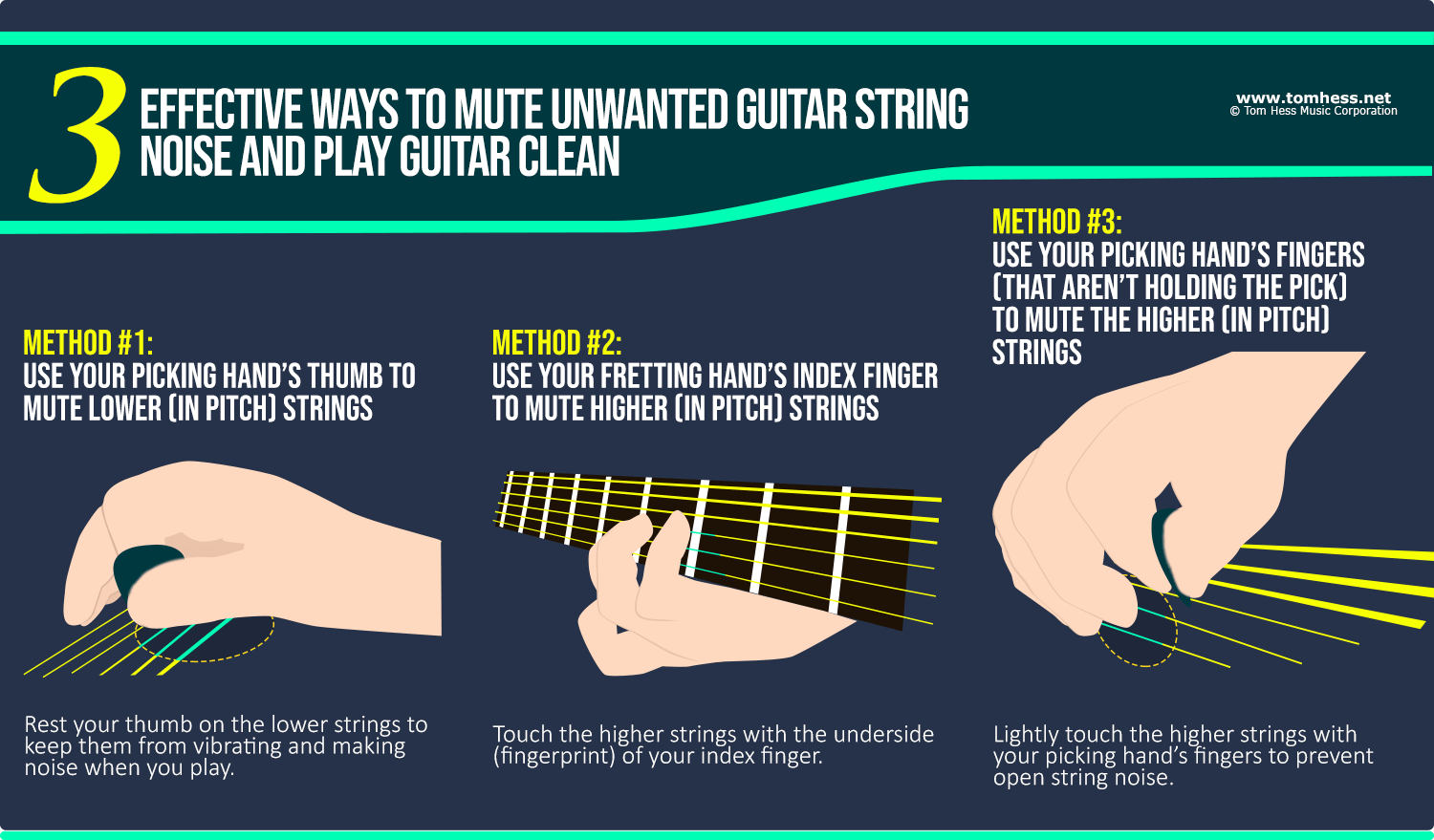
There's a second way to make a simple melody sound far less like a scale: use non-chord tones (notes that aren’t in the chord you’re playing over) to connect your melody notes. When you do it well, you sound advanced even when you’re playing a very simple melody. (The trick is to control the dissonance, so your non-chord tones don’t sound like mistakes.)
That brings us to the last question ... the one most guitar players misunderstand.
How Long Does It Take To Learn To Create Good Melodies?
Answer: It depends on which of the skills behind a good melody you already have, and which ones are missing from your playing right now.
Those skills are the ones in this article: how many phrasing elements (bends, vibrato, slides and rhythm) you can play expressively, how well you know your fretboard, whether you can control string noise on big jumps and the dissonance of non-chord tones, and whether you know which chords suit faster or slower playing.
The number of hours you practice matters far less than what you practice in those hours. Players who already have most of these skills learn to create memorable guitar melodies quickly. Players who are missing several of them take longer, no matter how many hours they practice.
When you keep asking how long it'll take, you think about the calendar instead of the skills you need to train.
If you want to improve guitar melody writing as fast as possible, stop worrying about how long it takes.
The players who get good at melodies fastest know exactly which elements of melodic phrasing are missing from their playing ... and they practice those elements with feedback that tells them whether they're getting them right.

The hardest part is finding out which phrasing elements you're missing, because it's very hard to hear what's missing from your melodies (you already know what you meant to play). So the fastest way to find out is to let me hear you play and tell you what's missing.
That's what I do in Breakthrough Guitar Lessons, my personalized online guitar lessons. I build them around YOU: your goals, your challenges, your strengths and weaknesses, your learning style and the guitar player you want to become.
As you practice, I give you feedback on your playing and adjust your lessons to your progress, so you always know exactly what to practice next and why.
To improve your guitar melody writing, I can tell you what's missing, whether your melodies fit the chords in the best way and which small changes would make them more expressive. A single article can't hear YOUR playing. I can.
I've done this for thousands of guitar players over the last 38 years. If you're willing to practice 30 minutes a day following what I teach you, I'm absolutely certain I can help you become the guitar player you want to be.
If your melodies sound like scales today, a year from now they could still sound exactly the same ... or you could be writing melodies that stick in people's heads, over slow ballads and heavy tracks alike.
Click the button below to see if Breakthrough Guitar Lessons are right for you, and start learning to create memorable guitar melodies: