How To Apply Guitar Skills When You Solo Or Jam With Others

EMAIL TO GET ACCESS
By submitting your info, you agree to send it to Tom Hess Music Corporation who will process and use it according to their privacy policy.
If you can play your licks and techniques well when you practice them on their own ...
... but you can't use most of them when you improvise or try to play a full guitar solo, you're not alone.
(This is one of the most common problems I help my guitar students fix.)
And here's the good news:
The problem is in the way you practice your guitar skills.
(Not your hands or a lack of talent.)
In the video below ...
I show you why the way most guitar players practice makes it so hard to use their skills when they play for real ...
... and how to practice guitar effectively instead.
(I also show you how this practice method transformed the playing of one of my guitar students and enabled him to play guitar like a pro, even though music is just a hobby for him.)
To begin ...
Here is how to practice guitar to apply your skills in real life:
I see the same problem from this video 👆 in guitar players at every level, from beginners to players who already play very well.
Dale, one of my students, is a good example.
Today, he plays his favorite Guns N' Roses and Dio solos note for note.
But when Dale first contacted me, he was stuck in a way that made no sense to him.
EMAIL TO GET ACCESS
By submitting your info, you agree to send it to Tom Hess Music Corporation who will process and use it according to their privacy policy.
He was 66, living in New Hampshire, and he'd been playing guitar for 13 years. He loved 80s rock and metal (whether or not that's your style doesn't matter ... the problem Dale was dealing with affects guitar players in every style).
His legato, bends and vibrato were all good, and he could pick fast enough to play every part of the solos he loved up to speed - as long as he played each part by itself.
But when he tried to play a whole solo from start to finish, or play for someone else, he played nowhere near his best.
He told me: "I can play every piece of that solo by itself. Every piece. Then I try the whole thing and it's like my hands belong to somebody else. I'm putting in more time than ever and it's getting worse, not better."
Dale never would have guessed what I found in his playing, or what I had him do about it. I'll show you both a little later in this article.
The Guitar Practice Mistakes That Keep You From Using Your Skills When It Counts
If you've ever wondered "why my guitar skills disappear," this is the reason:
Most guitarists practice their guitar skills for long, uninterrupted stretches of time. They might spend 30 minutes on picking, then 20 minutes on legato, then 20 minutes on arpeggios.
This makes intuitive sense ... but it’s the wrong approach. (I know, because I practiced exactly that way for years.)
Here's why:
Practicing this way only trains each skill individually. It doesn't make you better at using those skills together.
In most guitar solos, you have to switch from picking to legato to a bend to vibrato without any time to get ready.
Here's an example of what this looks like when you do it right:
That switching is a skill of its own, called guitar skill integration. If you never train it, it won't develop by itself.
This is why so many players end up playing the same old pentatonic licks when they play over a backing track. Those licks are the only things they've played together so many times that they can play them without thinking.
And the ‘usual’ solutions make the problem worse:
Why More Guitar Practice Isn’t The Answer
When guitar players can't use their skills in a guitar solo, the natural reaction is to practice harder. They add more time, work on raising their top speed, look for new exercises or learn more licks.
But they spend almost all of that extra time in the same long blocks of 1 skill at a time.
So they get a little better at each skill on its own, and they still never practice using those skills together. They end up with even more skills they can't use when it counts. And the better they play each skill by itself, the bigger the difference between how well they play each skill alone and how well they combine them.
But that's not the only problem:
Why Guitar Playing Feels Inconsistent From Day To Day
Practicing in long blocks of 1 skill at a time causes a second problem: inconsistent guitar playing. If something you played well yesterday is full of mistakes today, those long blocks are very likely why.
When you practice in long blocks of the same thing, you sound better than you really are.
If you play a lick 200 times in a row, repetitions 180 to 200 will sound MUCH better than repetitions 1 to 20. You're warmed up, and your whole focus is on that 1 lick. It feels like progress.
But come back to the same lick tomorrow (or even half an hour later), and it's likely to be full of mistakes again.
When guitar players notice this, most of them try to solve it with even MORE repetitions and MORE practice time. Others start working on things that sound like they should help, like hand strength and endurance.
But they still practice the same way. So they keep playing inconsistently, and they still can't use their skills outside the practice room.
So how do you solve it?
How To Practice Guitar Effectively So You Can Use Your Skills When It Matters
The solution is to practice your guitar skills together, with a guitar practice structure that keeps you focused on what you're doing instead of playing mindlessly.
The video at the top of this article shows the general idea of how to apply guitar skills together.
 How To Combine Your Guitar Skills Into Pro-Level Licks
If your techniques sound good by themselves but not together, these 5 tips show you how to start blending them in your licks and solos.
 Play At Your Best When It Counts, Even On Your Worst Days
Get a short practice routine that trains you to play well in front of other people, not just alone in your practice room.
 How To Stop Making Sloppy Mistakes While Playing Guitar
If you have days when you make far more mistakes than usual, this article shows you how to practice so you play well more consistently.
But you can't just copy the routine in the video.
The right way to set this up is different for every guitar player. When I set this up for my students, I look at 4 things:
1. Where your skills are right now. Have you already started developing every skill you need to tie together, or do you have blind spots (skills you’ve never practiced because you didn’t know you should)?
2. Your goals. Guitar players who want to play in a band need different skills first than players who want to improvise solos over backing tracks. Based on your goals, I choose which skills you start tying together first.
3. How much time you have to practice.
4. Your personality and your ability to stay focused on one thing for long periods of time.
Get any of these 👆 wrong, and you'll spend months practicing the wrong skills together, in the wrong order. And if practicing feels frustrating now, it'll keep feeling that way.
Change any 1 of those 4 things, and I set up the practice differently.
So, if you had to name the main reason you can't use your guitar skills when you play for real, could you?
Most guitar players can’t. So they do the only thing they can think of: practice more. (And when that doesn’t work, they often conclude they “lack talent.”)
I made a free training video that shows you what naturally talented guitar players do differently when they practice guitar. You’ll find out what natural talent REALLY is (no, it’s not something you’re either born with or not) and a TOTALLY different way to practice guitar that doesn’t take 8 hours a day ... 45 minutes will do.
By the end of the video, you’ll already be a bit better as a player. Check it out here:
Which brings me back to Dale’s transformation:
How Dale Learned To Play His Favorite Guitar Solos Start To Finish
Up until about 11 months before he contacted me, Dale had been improving steadily. He got better at every skill he worked on. Then he started trying to play full guitar solos, and he couldn't play them anywhere near as well as he played each part.
So he did what most guitar players would do. He doubled his practice time from 45 minutes a day to 90 and worked on raising his top speed, figuring that more speed would make it easier to combine his techniques.
He also took lessons from 2 different teachers (this was before he ever worked with me). Both gave him exercises they promised would build his consistency and fluency across techniques.
None of it helped.
When I watched Dale play, I saw that he was making the problem he wanted to solve even worse - every time he practiced.
The more time he spent on 1 skill at a time, the better he got at that skill by itself, and he still couldn't use his skills together when playing a solo.
First, I worked on his guitar skill integration by teaching him how to create guitar licks that use his legato, bends, vibrato and picking together in a single lick.
Second, I changed his guitar practice structure. Instead of long stretches on 1 skill, he followed a guitar practice rotation I laid out for him based on what I saw in his playing, alternating between the skills he wanted to play fluently.
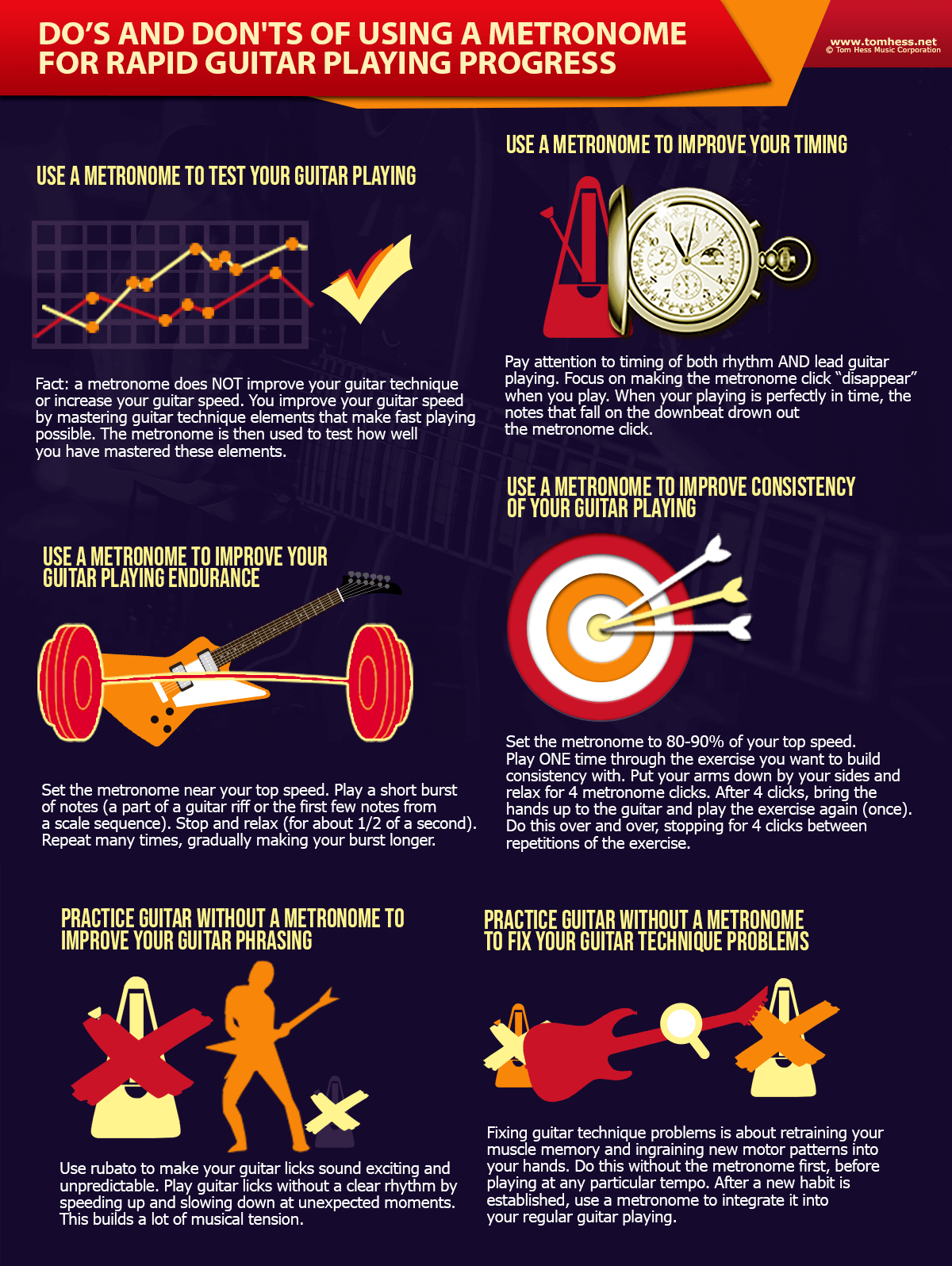
I also showed him how to use the metronome to train the consistency of his guitar playing:
And I taught him to play THROUGH mistakes.
Like most players, Dale used to get flustered by a mistake, stop and start over.
But part of using your skills together is being able to keep playing as if nothing happened - while still knowing a mistake DID happen so you can work on it later.
Playing through mistakes and not noticing mistakes are 2 very different things.
Not noticing them is what keeps players sloppy. Playing through them while you know they happened is what makes fluency possible.
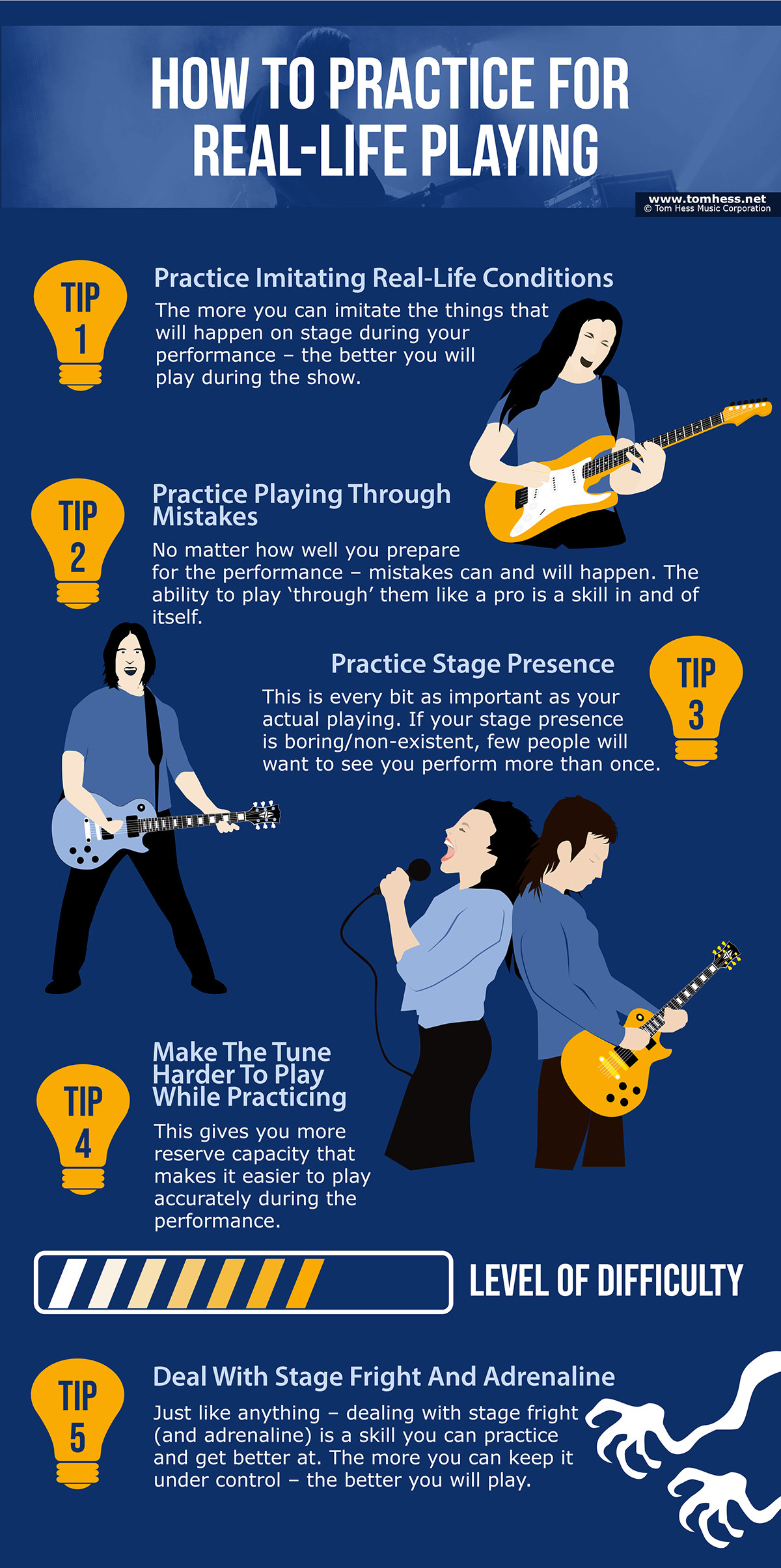
Here are some of the ways I train guitar players to practice for real-life playing:
At first, Dale wasn't sure about any of this. It felt like he was practicing each technique LESS than before.
But once he noticed he was playing just as well on Tuesday as he had on Monday, he stopped doubting it.
A little over 7 months after we started, he played a full Guns N' Roses solo note for note.
Guitar has always been a hobby for Dale ... and now it's a rewarding one instead of a frustrating one.

Dale got there because I saw what was happening in his playing that he couldn’t see, and changed how he practiced to match. He didn't get there by practicing harder on his own.
Here's where Breakthrough Guitar Lessons comes in.
I work directly with guitar players to find out exactly why they can't use their guitar skills when they play for real. Then I build their practice around THEIR skills, THEIR goals, the time they have and how they stay focused.
As you improve, I change what you practice and how. When something isn't working, I see it in your playing and tell you what to do differently. And when you're not sure you're doing something right, you can ask me directly.
Before he came to me, Dale spent the better part of a year practicing more than ever and playing worse than before. Today he plays the solos he loves from start to finish, and playing guitar is fun for him again.
A year from now, you could hear yourself play your favorite solos start to finish, the way Dale does. Or you could still hear yourself stumble every time you switch from picking to legato in the middle of a solo.
To find out how I can help YOU use your guitar skills when it really counts, click the button below.